Category: Social Media

  • Irish Breeds to Bring You Luck This St.Patrick’s Day

    Irish Breeds to Bring You Luck This St.Patrick’s Day

    Irish Breeds to Bring You Luck This St.Patrick’s Day

    St. Patrick’s Day is here and everyone is looking for their lucky leprechaun on the other side of the rainbow with a pot of gold. Since that probably won’t happen, We have rounded up 5 of the cutest Irish dog breeds In honor St. Patrick’s Day!

    1. The Irish Terrier

    Irish Terrier’s are definitely cuter than a leprechaun and they are super smart too! Did you know that this breed used to work as messengers and lookouts World War I? Click here to learn more about the Irish Terrier!

    1. The Irish Setter

    While Irish setters are now famous for their vibrant red coats, that hasn’t always the case. As hunter dogs their owners preferred them to be red and white, so they could see them easily in the field. Soon the breed began to appear in dog shows more than hunting in the field and people went crazy over their red coats. To learn more about the Irish Setter, click here!

    1. The Irish Red and White Setter

    This breed almost faced the brink of extinction when popularity of their all red counterparts above was at an all time hight. Fortunately they were able to be revived in the 1920s and are still around to this day! To learn more about the Irish Red and White Setter, click here!

    1. The Irish Wolfhound

    Irish Wolfhound’s have ties all the way back to 391 A.D. originally being used in war to drag men off of their horses and hunt large game. Times have changed as today the dog is a great family companion competing in tracking and obedience. To learn more about the Irish Wolfhound, click here!

    1. The Irish Water Spaniel

    This is a very special breed of dog to many. Why? because it barely sheds! Among other reasons, the Irish Water Spaniel This breed is one of the oldest and most rare breeds of the spaniel. With its curly coat and fun loving attitude this dog will sure to bring luck to anyone that needs it any time of the year, Not just St. Patrick’s Day.  To learn more about the Irish Water Spaniel, click here!

    Source: Pet Health Network


    Copyright: Local Value LLC

  • Reading Your Dog’s Body Language

    Reading Your Dog’s Body Language

    Reading Your Dog’s Body Language

    Since dogs can’t talk to us, they have to rely on other ways to communicate with us such as vocalizations,, body gestures and postures. They have to rely on these communication to let other dogs and people know how they are feeling, especially if they feel stressed, frightened or threatened. They hope by communicating this way it will diffuse the situation and at the very least, they hope they won’t get in trouble.

    Since we can’t always read our animals body language accurately, we must learn to read each animal individually. Dogs are  just like people in the regards that they have their own individual personalities and  they don’t express themselves in the same manner. While one dog wagging its tail might be happy to see you, another dog wagging its tail might mean that it is anxious or nervous.

    If a dog is getting increasingly concerned about the situation it finds itself in, its behaviour will begin to change. As the dog gets more concerned about the situation it’s in, its behavior will change. When a dog tucks its tail under its belly, it might be frightened. When the dog reacts by growling, snapping or biting, it’s telling you that it wants to be left alone! Since there is no way of predicting whether or not a dog will bite you based on its breed or size, always pay attention to the behaviour of the animal.

    Next time you’re around a dog and go  to play with it, really observe it and ask yourself the following questions. Is the dog happy and showing you attention? If the dog is relaxed and friendly, and seems happy to see you, it’s probably in a good mood and will want your attention! If the dog is avoiding you and generally staying away from you, it’s probably best to leave it alone. If the dog seems nervous, or seems to be staring at you, you’ll definitely want to stay away.

    Just remember, never try to interact with a dog that isn’t your own without first asking the owner. The owner will help you to understand the pet’s mood and decide whether that is a good idea or not. Better safe than sorry!

    Source: AVMA

    Copyright: Local Value LLC

  • Poison Prevention and Your Pet

    Poison Prevention and Your Pet

    Poison Prevention and Your Pet

    March is National Poison Prevention Week. What originally began as a way to spread awareness about poisoning in people, evolved into a great way to spread awareness about poisoning prevents for your pets too!

    Is it Common for a Pet to be Poisoned?

    Poisoning is a very common reason that pets make a visit to their local vet. The National Animal Poison Control Center, handled 180,000 cases of animal poisoning in 2013. The good news is, most of these cases can be completely preventable with a bit of knowledge and education. So teach yourself today and don’t let your animal become a statistic.

    How Can I Tell If My Pet has been Poisoned?

    Unfortunately, most of the time a pet that has been poisoned will not show many physical signs and can vary with the type of toxin consumed. Some poisons are caused by pets accidentally eating mice, who have also eaten other poisons or toxins that pets encounter accidentally around the home or yard, like medications, pesticides or antifreeze. If your pet isn’t acting right and you think a poisoning is possible, take it to the vet or ER immediately!

    Seasonal Poison Risks

    Petsafe.net has listed some informative seasonal poison risks. Here are some common warm-weather risks to your pet.

    • Blue-green algae in stagnant ponds
    • Compost piles
    • Swimming pool and hot tub chemicals
    • Cocoa mulch
    • Venomous animals – toads, snakes, scorpions

    And here are their cold-weather counterparts.

    • Antifreeze (see above)
    • Ice melter
    • Liquid potpourri

    How YOU Can Prevent Pet Poisoning

    Everything can be prevented and prevention is key. Keep your medications out of reach in child-safe containers. Make sure all cleaning products and chemicals are in sealed containers and out of reach of pets. Secure your lawn chemicals and antifreeze. Dogs are naturally curious about the world and will get into EVERYTHING. They don’t know the difference between toxins and treats and as their guardians and protectors, it is up to us to keep them safe and make sure all chemicals and medications are secure.


    Source: PetSafe 

    Copyright: Local Value LLC

  • Why Does My Dog Lick So Much?

    Why Does My Dog Lick So Much?

    You’ve might have wondered why your pooch just loves licking so much, especially your face. When you get home, when you’re sleeping, whenever is a good time. They are there to greet you, tongues and all. But why do they love to lick?

    Here are a few reasons:

    • To Show affection
    • To help heal their wounds
    • When they are bored
    • When they are hungry
    • They like the taste of your skin

    Licking is a habit that is learned near after at birth. The mother will lick her puppies to clean them, show affection and stimulate their elimination systems.

    Puppies learn from their mother, so they will use their tongues to discover the world around them.

    Is your dog licking at his paws constantly? Notice a red, swollen, inflamed appearance to the area between the paws? If so, talk to your vet  as soon as possible. Not only is excessive licking very uncomfortable for your dog, but it is often due to an underlying medical problem that should be checked out.

    Petful says:

    If your dog licks a lot, invest some time in training him to be more restrained, especially if he is big. You are prepared to handle his weight and affectionate greetings, but visitors to your home may not be ready for all that heavy licking.”

    Communication

    Dogs also lick people as a form of communication. A lick can be a sign of greeting to humans who have been away all day at work. A lick upon your return may be a way of saying, “Hello,” or “I’m so glad to see you.”

    Though licking can also be a display of dominance as well so it’s important to know the difference.  If you pup is trained and knows that you are in charge, he may be licking you to acknowledge that.

    Sources: Petful, Pet Health Network:

  • Should I Neuter My Puppy?

    Should I Neuter My Puppy?

    Are you aware of the main reasons to neuter a puppy?

    There are a lot of pet owners out there that opt to get their pup neutered. Many believe it is important for reducing the pet overpopulation. It also helps prevent aggression in dogs because Neutered dogs tend to be less aggressive and less defensive.

    Neutering your puppy can also prevent Roaming. Pet Health Network says,

    “Intact males are more likely to wander around, get hit by a car, end up lost or get into a fight. They can smell a female in heat miles away and sometimes will do anything to check her out—or worse. This can lead to countless undesirable encounters.”

    Unneutered pets do have problems. In male dogs, the most common behavior is an aggressive temper.  Of course, there are many male dogs that have been neutered who are perfectly sweet.  Neutering, when done early in life, can reduce aggressiveness and improve behavior overall. If your dog loves to mount other dogs, it might decrease that embarrassing behavior.

    Should I worry about the risks of neutering?

    Talk to your veterinarian about the benefits and risks of the sterilization procedure so you can make an informed decision. The cause of having your pets surgically sterilized results in the effect of a happier, healthier friend for life who is not contributing to a surplus of unwanted pets. Again, we’re talking life or death. Speak to your veterinarian or your local humane society for information or referral to a low-cost program.

    If you’re going to wait to neuter your dog for any number of valid reasons, you have to be an even more vigilant and responsible owner. Don’t let your dog roam free just because you’re “pretty sure” there’s no dog in heat for miles. He’s going to get hit by a car, or get in a dog fight. Don’t take male dominant behavior lightly. If Mr. Macho-in-the-Hood is getting out of control, the benefits of neutering may save you a lot of headaches.

    Sources: Pet Health Network, AVMA, Pet Safe 

  • Valentines Day Safety Tips For Your Pet

    Valentines Day Safety Tips For Your Pet

    Valentine’s Day is almost here and though most people don’t think of safety tips for their pets on this love filled holiday, here are three important tips to keep your furry ones safe.

    • Keep your pet away from Chocolate and Sweets – You should know that chocolate, sweets and pets don’t mix. Don’t leave sweets out where your pet can get to it. Chocolate can cause abnormally high heart rhythms in dogs. Just remember: The darker the chocolate the more deadly it is. Candies contain natural sweeteners that can be fatal to them as well. So lock those sweets up and save yourself a trip to the ER!


    • Make sure the flowers for your sweetheart are safe – The aroma of fresh flowers can entice your pets and stir up curiosity to smell or try to eat them. Be careful! Lilies can be toxic to cats and thorns from a rose can be swallowed. Again, something that many cat owners might have thought about so be careful when picking an arrangement and make sure it’s “animal friendly.”
    • Gift wrapping – Usually gift wrapping, bows or ribbons of any kind will attract your pets, especially your cat. When you open your gifts it’s important to clean up all gift wrapping so you don’t give your furry ones the chance to swallow anything that will pose any serious health risks.

    So remember: when you are thinking about your loved ones this Valentine’s Day, don’t forget about your four-legged friends. Taking the extra steps to ensure that your pet is not in danger will save you some vet visits in the future. Our furry friends give us unconditional love and companionship year-round and deserve a show of affection from you, too!

    If you have any concerns about these tips, you should always contact your vet.

    Sources: Petsafe, Pet Health Network  


  • National Pet Dental Health Month and Your Pet

    National Pet Dental Health Month and Your Pet

    It’s National Pet Dental Health Month and though we should always take good care of our beloved one’s teeth and gums, this month is dedicated to addressing the significance of oral care for our pets year round.

    First of all, it’s important to brush your pet’s teeth. Periodontal disease is the most common clinical condition in cats and dogs even though it’s completely preventable. 4 out of 5 dogs over the age of 3 years have some sort of periodontal disease. That is why it is very important to brush those chompers.

    Dental disease can actually lead to problems with your pet’s organs. AVMA suggests to watch Dr. Sheldon Rubin’s easy, step-by-step instructions on how to teach a dog or cat to accept a daily tooth brushing.

    If you have noticed your dogs breath is isn’t very pleasant, brushing your pet’s teeth with have better breath. Occasionally, “bad breath” may be caused by gastric odors or metabolic disease. Again, talk with your vet if you have concerns. His breath can be chalked up to his poop recycling habit. But if your dog’s mouth has an unpleasant odor day in and day out, he most likely has smelly bacteria in that mouth and needs attention. A pet with healthy teeth equals a pet with better breath!  Also, taking care of your pet’s teeth can prevent other health problems, which can save you money in the long run.

    It’s also important to mention that your dog and cat are very good at hiding pain – you might never know that your pet has a serious dental problem until it’s very advanced. This is yet another reason it’s important to take your pet in for regular dental checkups.

    Don’t just brush your pets teeth just for the sake of National Pet Dental Health Month but do it for health of your precious pup!

    Sources AVMA, Pet Health Network, Petful


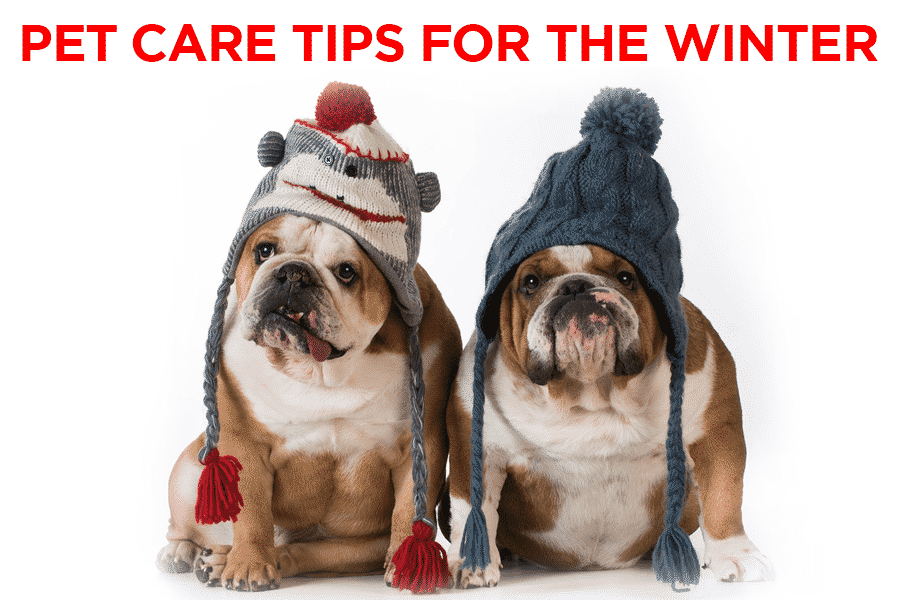
  • Pet Care Tips for The Winter

    Pet Care Tips for The Winter

    Winter is here,

    and that always brings pet hazards. Beware of these problems to ensure your pets are happy and healthy until things warm up again.

    Keep Pets Warm

    Make sure your dogs have shelter and an area to stay dry and out of the cold and wind. Indoors is the best, but unfortunately not all circumstances allow for that.

    Avoid Antifreeze & Other Poisons

    A lot of people change the antifreeze in their cars in fall and early winter. As a consequence, veterinary ERs see cases of antifreeze poisoning in dogs rise when the mercury dips.

    Watch out For Cats in Your Car

    When the cold weather rolls in, cats look for warmth and shelter anywhere they can find it. In many cases this involves curling up to the warm bed of the engine in our cars. Be aware of this and check before starting your car this winter and causing potential harm.

    Pets Need Fresh Water in Winter, Too

    Make sure the water supply doesn’t freeze. A frozen water bowl can lead to thirst and dehydration quickly.

    Read the Full Article Here: