Category: Social Media

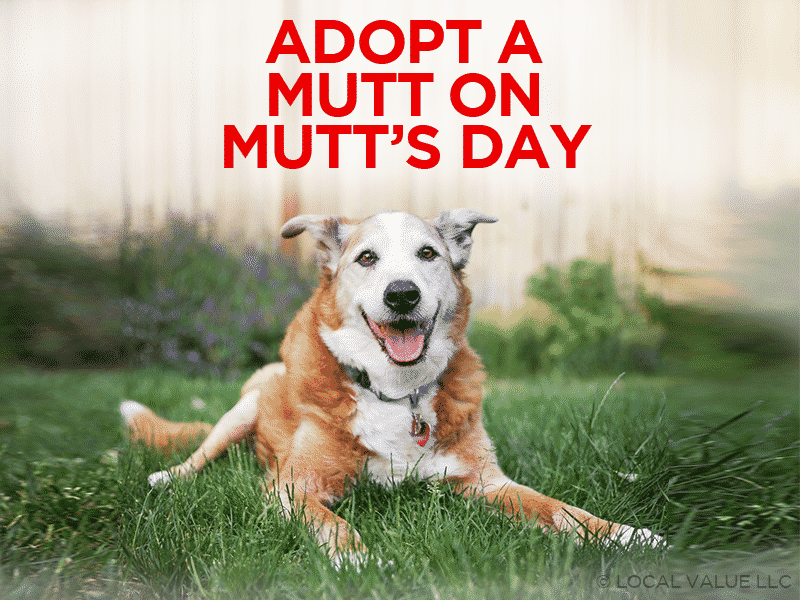
  • Adopt a Mutt on Mutt’s Day!

    Adopt a Mutt on Mutt’s Day!

    Adopt a Mutt on Mutt’s Day!

    July 31st is Mutt’s Day, where we celebrate our adorable mixed breed buddies. Have you been thinking about getting another dog or adopting your first? Adopt a mutt – the best of all worlds!

    When its time to get a dog, every potential owner ask this question… “Should I adopt a mutt or go with a purebred?” While purebreds can be attractive because they have district traits and characteristics, mixed breed dogs can offer more benefits that might be more appealing to the average down owner. Before you fork out the big bucks on a purebred, consider these reasons to go mutt!

    Many years ago, to bring awareness to this awesome type of dog, a brilliant poster was printed up by one of the national animal welfare organizations. The poster read, “Decide Between a Shepherd, a Setter or a Poodle?  Get the Best of Everything—Adopt a Mutt!”

    That was excellent the, and still is excellent advice today! Truth be told, most dogs are pretty darn awesome.  When you are adopting from a local shelter, you can find a new best friend AND save a life. Most shelters are full of mutts and end up in the shelter because people think there is something wrong with them or they are faulty. Most dogs that are surrendered to shelters had owners with unrealistic expectations and didn’t estimate the amount of time, effort and money it takes to train any dog, purebred or mutt.

    Mix breed dogs are truly unique as they carry traits and characteristics from different types of dogs, instead of just one. Whether you’re looking for long-hair or short, wire-hair or curly, long tail or docked, big dog or little, terrier, spaniel, retriever or toy breed – the shelter can introduce you to your new best friend!

    Can’t decide between a shepherd, a setter or a poodle?  Get the best of everything…Adopt a MUTT!

    SOURCE: Pet Safe
    COPYRIGHT: Local Value LLC

  • National Lost Pet Prevention Month

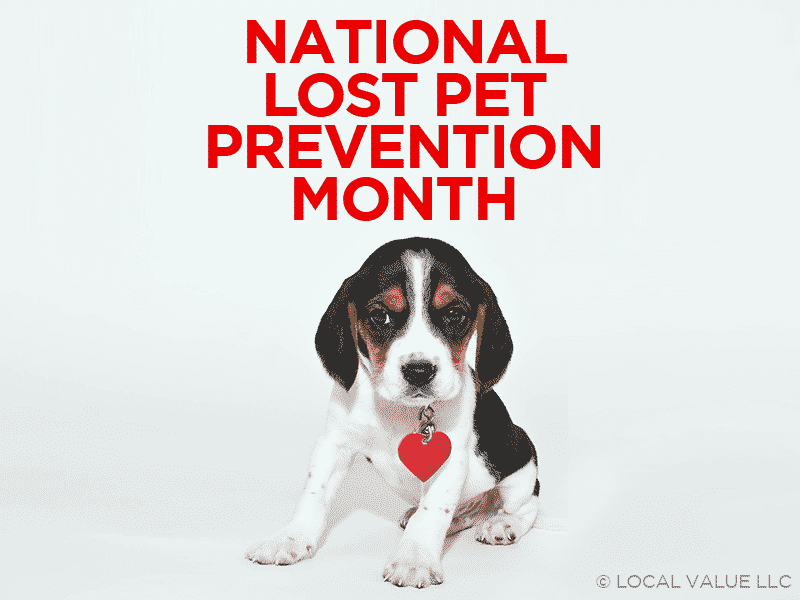
    National Lost Pet Prevention Month

    What You Can Do To Keep Your Pet Safe

    July is National Lost Pet Prevention Month and the thought of losing our beloved pets is unbearable for most. We love them and want to make sure we are doing everything we can as responsible pet parents to ensure they are healthy, happy and SAFE!

    There is so much new technology out there these days to help us find our lost animals, should the worse happen, but we shouldn’t forget about traditional methods like getting your pet a proper identification tag.

    This is the first thing you probably get for your new furry four-legged friend when you bring them to their new home but you have to make sure you include important relevant information on the tag to ensure that your pooch or kitty can get returned safely to you should they get out for whatever reason.

    Unfortunately, a lot of people don’t include the information they should when getting this tag. If you follow these few handy tips you should have no problem!

    Make sure to include the following information:

    • Your Pets Name
    • A Cell Number, and additional number
    • Your Address
    • I’m Microchipped! (if applicable)

    One thing to be aware of is when you put your pets name on the tag, everyone will know your pet’s name. It is great for someone with good intentions who wants to return your pooch to you, but a person with less Nobel intention could use that information to lure your animal away. Fortunately, in most cases the situation is not the latter and it is better safe than sorry.

    Here is hoping that your pet never runs away or escapes but if the worse does happen, at least you can ensure that you took the steps towards his safe return by providing all of the necessary information to whoever finds your fido or fifi.

    SOURCE: Pet Health Network
    COPYRIGHT: Local Value LLC

  • How To Prevent a Pet Related Fire

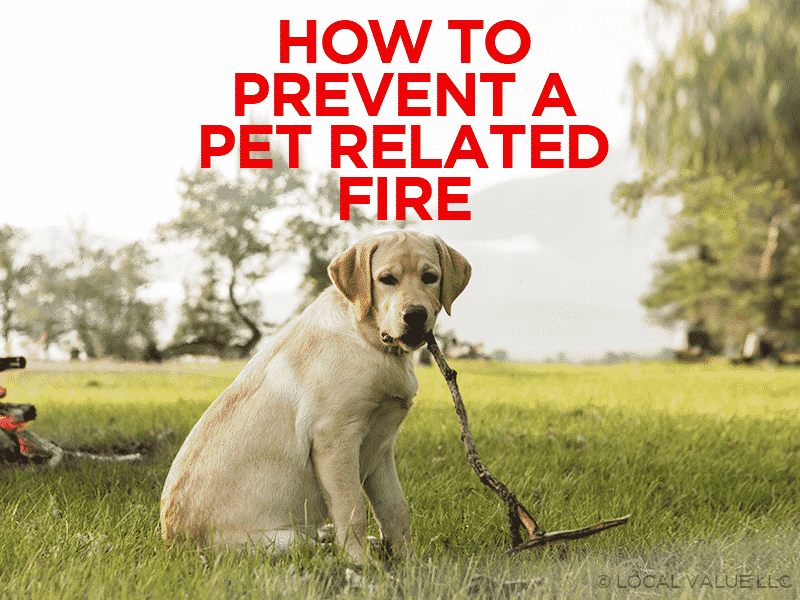
    How To Prevent a Pet Related Fire

    How to Prevent a Pet Related Fire

    Every year home fires affect an estimated 500,000 pets. Surprisingly, pets start about 1,000 of those fires. While it may be hard to believe that our beloved pets can be the culprit in such situation, taking simple measures to prevent such accidents are fairly easy and should be done to avoid any pet related fires!

    Pets who are always trying to snatch food and goodies off of the counters are likely candidates for accidently turning on the gas stove. Once your pet is on the counter, or even licking grease from the burners, they may accidently hit that gas knob. This is not something you may think about every day, but it is a situation that happens and you should be aware of it and take measures to prevent it.

    Put out open flames – Pets are naturally curious animals by nature. If the stove is left on, a candle unattended or even your fireplace on, it may be a little too enticing for your curious pet to ignore.  These can have devastating consequences.

    Remove stove knobs – Remove stove knobs or protect them with covers before leaving the house. The stove or cook top is the #1 appliance involved in your pet accidentally starting a fire.

    Buy flameless candles – Flameless candles are candles that use a light bulb instead of a flame. They are very realistic and a great way to have ambient lighting without using an actual flame. Cats are known to accidentally start fires with their tails.

    Try Ceramic or Steel Bowls – Try switching up your traditional glass bowls to stainless steel or ceramic. Glass bowls filter the sun and depending on the temperatures, could start a fire on the grass or deck below.

    Crate young pets – Puppies are mischievous and should be crated when you aren’t there to avoid potential hazards.

    Just a few small changes around your house can add a sense of relief for you and your animals.  Knowing you have fire proofed your home and did all you could as a responsible pet owner to prevent pet related fires

    SOURCE: Pet Safe
    COPYRIGHT: Local Value LLC

  • Heat Stroke & Your Cat

    Heat Stroke & Your Cat

    Heat Stroke and Your Cat

    We are in the height of the summer, and don’t let it slip your mind that your cats can be affected by the heat just like dogs can be. During the hottest days of the year make certain to keep your feline friend in mind and comfortable this summer. Every year, many cats are exposed to high temperatures of heat and tragically some become overheated.

    Heat stroke is a life-threatening condition where the body’s internal organs begin to shut down as a result of elevated body temperature caused by high temperatures. Here are a few ways you can help prevent this from happening to your cat.

    While cats might not take as many road trips as your dog companions do, that doesn’t mean that cats aren’t ever in the vehicle. It is common for cats to take rides in the car while going to the vet. Just like dogs, even being left in the car for a few minutes while you run in the store can be harmful to your cat and cause a heat stroke.

    A general rule of thumb is that if people are comfortable with the temperature, your animals probably are too! That being said, it is always wise to watch for signs of heat stroke, as cats don’t have a way of regulating their body temperature like humans have. They cool their body like dogs, by panting and perspiration on their footpads. However, neither method is effective in cooling them off in high heat situations.

    Even when it isn’t too hot, your cat can feel much hotter in a small space with no ventilation so it is important to keep that window open or the air on for kitty.

    Keep an eye on your cat and make sure they don’t display any of the following signs.

    • Panting
    • Red Tongue
    • Dark Red Gums
    • Pale Gums
    • Drooling
    • Weakness
    • Anxiety

    If your cat exhibits any of these signs, call us or bring your cat to the vet immediately!

    By following these tips and being aware of the temperature and your cat’s surroundings, you will ensure to keep kitty safe from heat stroke this summer. If you have any questions or concerns, you should always visit or call your veterinarian — we are your best resource to ensure the health and well-being of your pets.

    SOURCE: Pet Health Network
    COPYRIGHT: Local Value LLC

  • Pet Advice: What July 4th Means To Your Pet

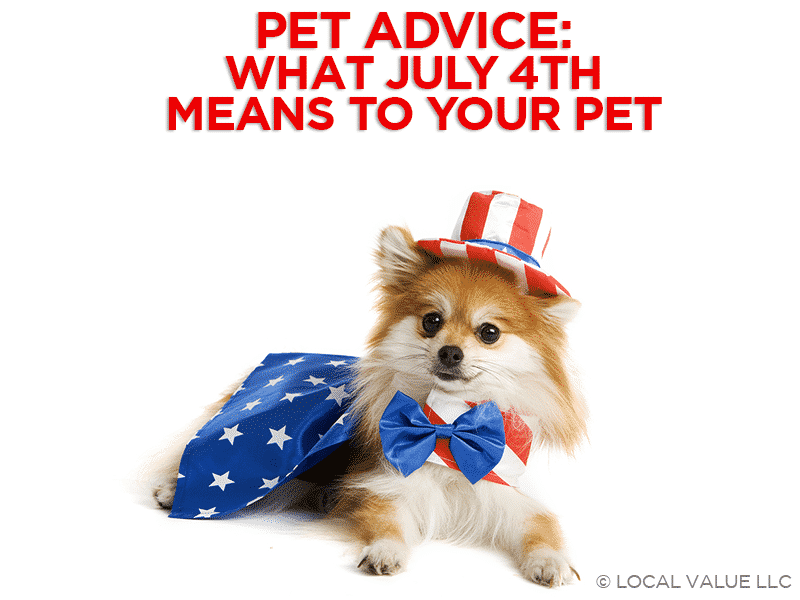
    Pet Advice: What July 4th Means To Your Pet

    July 4th

    Usually, you get together with your friends and family on Fourth of July, right? You might have a picnic or a little backyard BBQ, relax and maybe go see some fireworks. That might sound like a good time to you, however, all of the Fourth of July festivities can terrify your pets.

    Pay attention to you pet to how they react to the loud sounds of fireworks because you never know if those sounds are frightening your pet and could cause them to run. The summer heat is another thing to worry about and could be very dangerous. In order to keep your pets safe, it’s important to follow a plan to keep them safe.

    Fourth of July Safety Tips:

    1. ID Tags: Always make sure your pets – cats and dogs alike – have ID tags with correct information on them.
    2. Current Photo: Always have a current photo on hand. You don’t want to show a picture of your lost pet if the pic is a baby picture.
    3. Microchip: Consider getting your pet microchipped. If your pet is microchipped then make sure all information is up to date.
    4. Anxiety Reduction: If you know your pet gets anxious during loud noises like fireworks, consult your local veterinarian on which types of treatments or therapy can help reduce the risk of problems.
    5. Secured Gates: Make sure all of your gates are locked, pet doors or gates are secure. You want to keep your pet safe and don’t want them to escape.
    6. Cates: Crates can keep your pets safe. Consider putting your pets in a safe and secure, escape proof room or crate during Fourth of July Festivities.
    7. Indoors: If you keep your dogs outside then consider bringing them inside during fireworks and they will thank you.
    8. Table Scraps: Avoid the urge to feed your pets table scraps or other foods intended for people.
    9. Trash: Check your yard for any trash that might have been left out from the festivities. There might be something dangerous like sharp objects such as cans or toothpicks.
    10. Cars: You should never leave your pets in the car when it’s warm outside. Vehicle interiors heat up much faster than the air around them, and even a short time in a locked car can be dangerous to pets.

    SOURCE: AVMA
    COPYRIGHT: Local Value

  • Take Your Dog To Work Day  Tips

    Take Your Dog To Work Day Tips

    Work Day Tips

    June 24th is national Take Your Dog To Work Day. If you didn’t get the memo then you will be surprised if you see some furry ones passing by your office or cubicle.

    A 2006 survey by the American Pet Products Association (APPA) found that 1 in 5 companies allow pets in the workplace. Participants said pets make for a creative work environment, improve employee attendance and productivity, and help employees better relate to each other according to Petsafe. “Having a dog, or any pet around has a soothing and mood-lifting effect on people.”

    Here are some tips to make Take Your Dog To Work Day:

    1. Be Prepared – Don’t forget food and water for your dog. Leashes, collars, and poop bags would be a great help as well.
    2. Respect Others – Not everyone might be comfortable around a dog so respect them. Keep your dog around your office or cubicle and let others come and pet your dog.
    3. Cope with their anxiety – Maybe your dog might be anxious and they might not take to being in an office. If this is the case then make them feel comfortable as possible. They might not think Taking Your Dog To Work Day is cute. If you know your dog has high anxiety around other dogs or people then taking your dog isn’t a great idea. Know from the start to prevent anything bad from happening.
    4. Properly discard of lunches – Many dogs love snooping for food in garbage cans or anywhere else they can find it. Assume Fido will consider the wastebaskets under desks at the office or the trash receptacle in the break room as good places to grab a snack — especially after lunch.
    5. Make sure your pet plays well with others – It is likely that you won’t be the only one at your job bringing a pet to work. Some dogs would do fine if they were the only canine in the office. Add a few more, and perhaps some cats, and circumstances could change dramatically. Have an accurate sense of what the workplace atmosphere will be, and determine whether it is a good fit for your pet.

    SOURCE: PetSafe
    COPYRIGHT: Local Value

  • Celebrate the Dog Dad in Your Life this Father’s Day

    Celebrate the Dog Dad in Your Life this Father’s Day

    Father’s Day

    When it comes to Father’s Day, dads have long gotten the short end of the gift stick with the usual boring ties, tools, and T-shirts.

    But when you add pets to the equation, these same old dad gifts become a lot more memorable.

    Active & Outdoors

    Does dad like to go for runs with his dog, walks in the park or try to stay active? Help him track his steps with this paw print pedometer. If jogging is his thing, these running shorts feature paw prints and are not expensive at all. You can alway get the furry one a Chuck It and add to the outdoor fun. You can end up running just as much as your dog trying to keep the Chuck It away from him.

    For less strenuous outdoor activity or for smaller dogs unable to run or walk long distances, consider getting a pet trailer that tags along behind a bicycle or pushed like a stroller. This allows different or smaller pets to spend more outdoor time with dad without the hazards (and make sure to bring extra water in hot temperatures).

    Charitable Gifts

    Make a donation to dad’s favorite animal charity or your local shelter in his name. Shop for gifts from websites that donate to animal charities and causes. If money is a concern, consider taking dad to the animal shelter and volunteering with him for the day. It helps the animal shelter, it’s free and you will feel good afterward. Call the shelter in advance to check on days and times that would be best to visit. You can also round up extra blankets, sheets, pillows and pet items and do a shelter drive-by.

    Memorial Gifts

    If your dad is an animal lover and recently lost a pet, this can be a difficult time. Sometimes the best gift you can give to someone who has lost a pet is your time, patience, understanding and willingness to listen. Another memorable gift people love are pet DNA tests. Those usually run no more than $100 and are usually very accurate.

    SOURCE: Petful
    COPYRIGHT: Local Value

  • June Is Adopt a Shelter Cat Month

    June Is Adopt a Shelter Cat Month

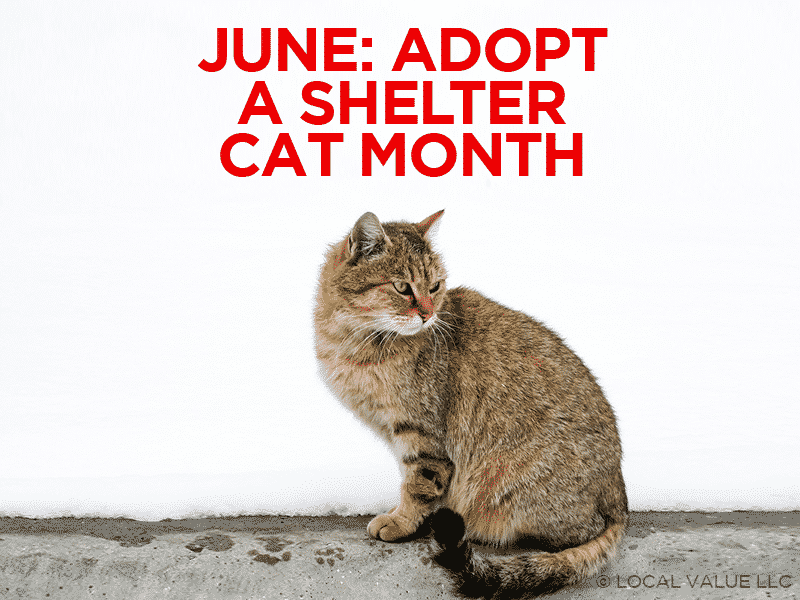
    June: Adopt a Shelter Cat Month

    A new year brings a new season. In this case, this season happens to be “kitten season”. Kitten season starts in the spring, peaks in the late spring or early summer, and ends in the fall. Now would be the perfect time to adopt a furry feline! After all, the American Humane Association estimates that four million cats and kittens end up in the shelters every year.

    What to consider before adopting:

    1. Consider your lifestyle before selecting your cat or kitten – Can you afford the cat or kitten? You will also need to buy food and litter monthly. To keep your cat or kitten healthy, annual veterinary exams are strongly advised. It’s important to consider this and I would recommend talking this over with your local vet.
    2. Do You Work Long Hours? – Adult cats are often more than happy to nap the day away alone while you’re at work. Kittens, however, require your attention to raise and keep them out of trouble.
    3. Do you really want a long haired cat? – Cats & kittens with long hair will require regular grooming to prevent mats.
    4. Are there young children living in your household? – Very young children may not realize how delicate kittens are. Always watch after your children around with pets. Cats that are at least one year old may be a better fit for homes with young children. Always ask about the temperament of a cat and let the shelter know if you have children in your household.
    5. Have you considered if a kitten is right for every member of your family? Kittens don’t always mix with children or seniors. For the child’s well-being and the cat’s, we generally do not recommend a kitten for families with children under the age of six. Kittens with sharp teeth and claws may inadvertently injure a small child. Their claws can also pierce the delicate skin of an older person and cause infection.

    Just remember, cat’s are amazing animals that will shower you with love and affection. Give an adult cat a second chance at life and you will win their heart.

    SOURCE: Petful
    COPYRIGHT: Local Value