Category: Social Media

  • Summer Care Tips For Pets

    Summer Care Tips For Pets

    Summer Care Tips For Pets

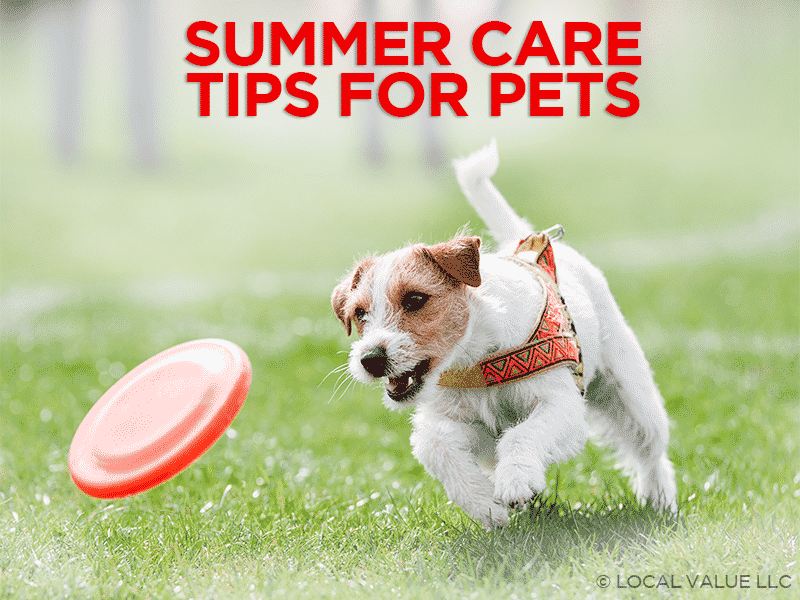
    Summer has long been a time for vacations, cookouts and pool parties. When the heat turns up, the dangers to pets increase too. To keep your dog, cat, and other furry friends safe, make sure you are prepared.  Whether it’s already summer or just feels like it, here are important pet care tips to keep your dogs and cats safe and healthy.

    1. Never, ever leave your dog in the car. Over the years, however, we’ve come to use the expression for sweltering days that aren’t fit for any dog. The truth is that dogs are more susceptible to the summer heat than we are. They have to wear a fur coat all year round. Whereas we can sweat to cool ourselves down, our pups sweat only through glands on the nose and paws and try to release heat by panting.
    2. Make sure your dog has unlimited access to fresh water. They can’t roll down the windows of a car or turn on the air conditioning. It’s up to humans to make sure that their dogs are comfortable enough and that they can live healthily in the summer heat.
    3. Make sure your dog has access to shade when outside. As I said, they can’t cool themselves like we do so they need those resources, especially on hotter days. Our canine pals need an escape during sunny summer months, so if you plan to let your pet outside, make sure that it can find shelter under a tree shade, a porch or other structure. The heat is not only a danger to your dog, but your pet can also become sunburned if it’s a thin-coated or wire-haired breed.
    4. Take walks during the cooler hours of the day. Remember, your pet has paws and doesn’t have the luxury of shoes and that ground can get very hot!
    5. Keep your dog free of external parasites (fleas, ticks) and heartworms. Consult your veterinarian about the best product for your pet: Every summer it’s smart to consult with your vet to see if there is any seasonal virus going around that could be harmful to your pet.
    6. Consider clipping or shaving dogs with long coats (talk to your veterinarian first to see if it’s appropriate for your pet), and apply sunscreen to your dog’s skin if she or he has a thin coat.

    Source: Petsafe
    Copyright: Local Value LLC

  • Tips to Create a Feline-Friendly Environment

    Tips to Create a Feline-Friendly Environment

    Tips to Create a Feline-Friendly Environment

    The life of a cat must be rough huh? Cats seem to have a pretty great life spent of napping in the sun, being attended to, pet and fed whenever required and requested. But while things look all fun and games for your kitty, things may look a little different from a cat’s perspective.

    The cat thinks it is confined to the house, with no choice of what they are eating or drinking. He or she only has one small place to go to the bathroom and no way to clean it themselves. In addition to being confined, many natural behaviors, like climbing and scratching, can lead to cats being punished.

    That’s why before you bring a new feline friend into your home, it is important that pet owners get familiar with the behavior of cats so they can create an environment to best suit the cat and its needs. By doing this, your cats will be happier and healthier.

    On the contrary, living in a threatening environment will cause their stress levels, and hormones to rise, in addition to other concerns. By changing this and creating a cat-friendly environment, the cat will be interested in what’s on around it without continually being stressed out.

    Always make sure to keep your kitties water fresh, with the food and water in fresh clean bowls. Try to remove their waste from the litter box once every day or so, to ensure they always have a clean place to go to the bathroom. Cats are neat freaks and need their food, water, and litter box clean at all times to feel the happiest. Cats also need stimulation and enjoy toys, catnip and places to climb such a cat trees you can purchase from your local pet store. The last thing that kitties need is regular attention and love. Once you have checked all of these boxes, you and your feline will live a happy life.

    Source: AVMA
    Copyright: Local Value LLC

  • Celebrate Pet Week By Celebrating Your Shelter

    Celebrate Pet Week By Celebrating Your Shelter

    Celebrate Pet Week By Celebrating Your Shelter

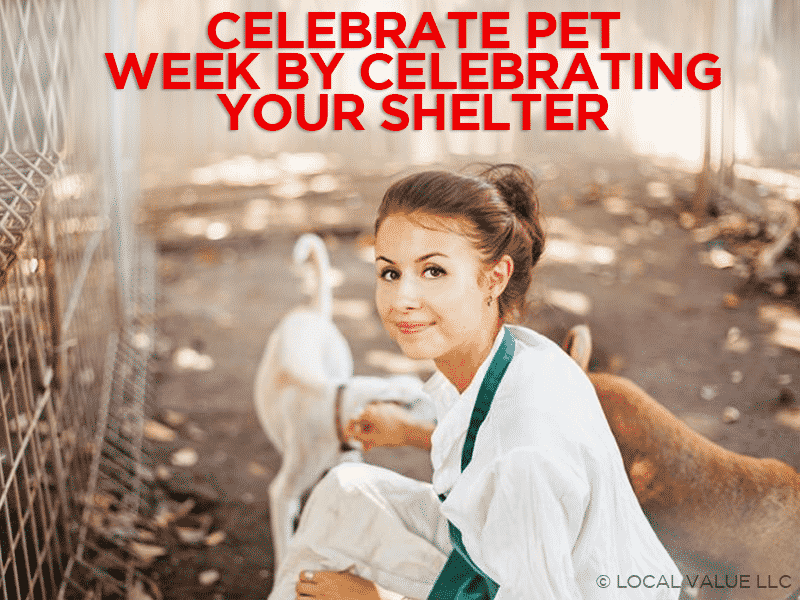
    Without local animal shelters, millions of animals who go on to be pets and best friends would be abandoned and not cared for. A lot of the time, the work done at local shelters is done behind the scenes with no fuss or fare. The people who work there day in and day on behalf of our future pets deserve the highest of praise, even though they don’t want praise. They just want to save lives and should be worthy of our gratitude.

    Shelters provide us with the greatest connection we can make; they supply us with our best friends! They are one of the only places you can go to and leave with a lifetime of companionship while saving a life and gaining unconditional love. You can’t get that at your local shopping mall! Shelters do an amazing job of helping adopters make decisions that are in the best interest of the pet and their family.

    Shelters are also a good source of education, giving us a place to educate the children and people of the community by offering education programs. The more we know, the more we can help the animals in our cities.

    In addition to providing connections we have for life, they also help control the pet population to avoid a rise in unwanted puppies and kittens. They provide low-cost spay, neuter programs to help address the root causes of overpopulation and animal homelessness, instead of simply dealing with the aftermath. Another great benefit is that shelters help provide low-cost vaccinations in addition to the spay and neuter programs.

    While there are dozens upon dozens of other reasons we should appreciate the work done in our local animal shelters, these are among a few you should appreciate your local animal shelters and all of the selfless work being done without our knowledge to help animals. Without animal shelters, you might not have a pet to celebrate this National Pet week.

    Source: Petsafe
    Copyright: Local Value LLC

  • Who Are Veterinary Specialists?

    Who Are Veterinary Specialists?

    Who Are Veterinary Specialists?

    Few people often bother to check and understand the extra initials and alphabets behind a veterinarian’s name. Some even ignore them ignorantly while others may recognize them though with little or no interest at all. Sadly, they are ignoring the basic tenets of distinguishing professional veterinarians from not-so-qualified veterinary personnel. So, what do these initials represent in particular? Are they helpful to pet owners? Well, the answers to these questions lie in understanding each initial.

    In essence, these initials mean that the veterinarian has undergone advanced training to become a professional in the area of specialty. Here are common initials which are used to describe the professional qualifications of veterinary specialists;

    • DABT. This represents Diplomate of American Board of Toxicology
    • DACVECC. In full, it represents Diplomate of the American college of Veterinary Emergency Critical Care
    • DVM. Diplomate of Veterinary Medicine.

    Survey shows that only 11,000 out of the known 90,000 veterinarians are qualified veterinary specialists in the US. So, what is the difference between a veterinarian and a veterinary specialist? Well, unlike a veterinarian, a specialist has undergone advanced training beyond college level and it’s someone who has completed tertiary training by undergoing further vigorous training in fellowship or residency, usually for 2 to 4 years. For one to be certified by a board, he or she has to publish a scientific research paper and pass an intense two to three-day examination. So, this training is not easy at all.
    In the USA, there are several medically-associated veterinary specialties including:

    • Nutrition (ACVN)
    • Dentistry (ADVC)
    • Ophthalmology (DAVCO)
    • Behavior (DACVB)
    • Anesthesiology and Analgesia (DACVA)
    • Veterinary practitioners (DABVP)
    • Pathology (DACVP)
    • Surgery (DACVS)
    • Radiology (DACVR)
    • Emergency critical care(DAVECC)
    • Neurology (DACVIM Neurology)
    • Dermatology (DACVD)
    • Wildlife/Zoo (DACZM)
    • Cardiology (DACVIM Cardiology)
    • Internal Medicine (DACVIM Internal Medicine)

    Recently, other less vigorous specialties have emerged. While this may indicate a worrying trend, it is imperative to note that some pet treatment procedures may not require specialized training. For instance, a routine examination may not require specific training e.g. publications. Even so, it is imperative to seek advice on how to find the best pet specialist, especially when in doubt or when treating complications that require specialized training.

    Specialists deal with complicated health cases such as, when the pet is critically sick, when advanced procedures have to be done like total hip adjustment or when an ultrasound of the heart has to be done. When a pet is suffering from advanced kidney failure, consultation with an internal medicine expert is advisable. On the other hand, emergency critical care specialists respond to cases of an urgent situation. Additional information relating with veterinary specialists can be found on AVMA American Board of veterinary specialties website.

    SOURCE: Pet Health Network, AVMA
    Copyright: Local Value LLC 

  • How Many Miles Can You Run With Your Dog?

    How Many Miles Can You Run With Your Dog?

    How many miles can I run with my dog?

    Although all people can run a marathon, regardless of their height, shape or body build, it’s not the same with dogs. It’s very important for dog owners to determine whether your breed is meant to run- Let’s figure out how!

    It’s a fact that some dog breeds are just not meant to run. These include Boston Terriers, Pugs, Pekingese dogs, French Bulldogs and English Bulldogs. Moreover, big dogs like Doggie de Bordeaux, Mastiff or Newfoundland, which are the lazy, 100 lb. dogs, difficult for you to even lift into your car, should not be made to run for more than a mile.

    Next thing to consider is the burliness of your dog. If your dog has a muscular build, he probably prefers to sprint. But, keep in mind, such muscular dogs ( like Boxers, Greyhounds, Pit-bulls) can overheat easily! If your dog has shorter legs in comparison to his body, he’s probably not the runner-type.

    Finally, if your dog has a smooshed face with tiny nostrils that make it pant even at rest, or snore louder than your husband, he’s probably going to be okay running or jogging short distances only. It is important to consult with your vet and take it extremely slow while acclimatizing your dog to such (agonizing!) hobbies.

    Look for a dog that is healthy, excitable and enjoys running and playing. Typically, Labrador Retrievers love to run and play, making good running partners, as do Golden Retrievers, German Shorthaired Pointers, Border Collies, Mutts, Schnauzers and the little Shih-Tzus.

    Don’t expect your dog to cover 5 miles on day one, 12 miles on day two- take it slow, one step at a time. If your dog is dragging behind, huffing and puffing with that exhausted face (even on a cool day!), take it easy! It is not worth training for your marathon, at the cost of your mutt’s health and well being!

    Source:  Pet Health Network
    Copyright: Local Value LLC

  • Heartworm and Your Dog. What You Need To Know.

    Heartworm and Your Dog. What You Need To Know.

    Heartworm and Your Dog. What You Need To Know.

    Despite major awareness on heartworm infections, thousands of dogs continue being infected each year. However, these heartworm infections would have been prevented if people had some knowledge about these heartworms.

    Habitat – Heartworms first entered the country along the Gulf of Mexico but now all the 50 states have cases of infections. These results when people move from place to place with their dogs which may be carrying the infections.

    Dog tests – Since any dog can be infected, it is advisable to always take your dog for annual tests. To add on that, they should be given monthly preventives which are very effective and affordable.

    Heartworm reservoirs – The major reservoir host for heartworms are coyotes and also stray dogs. It is, therefore, necessary to do away with coyotes and stray dogs where you live.

    Mode of transmission – Mosquitoes are known to transmit a lot of diseases, one of them being heartworms. Since they are all year round insects that have the capability to multiply faster, measures to control them should be taken immediately and always.

    Climate – Due to the changes in environment and climate, the initial triggers have been becoming less effective in fighting heartworms keeping in mind that mosquitoes are an all year round insects. Therefore, preventive measures should always be taken throughout the year.

    Body size – The heartworms larvae are microscopic but once they get into your dog’s lungs, they can grow up to over a foot long. This causes severe devastation to an infected dog as the heartworms start to multiply.

    Treatment – Though an infection is hard to cure, the treatment involves injection of certain chemicals and partly antibiotics which require weeks or even months of exercise restriction to your dogs.

    Preventive measures – All the preventives belong to the Macrocyclic lactones group of drugs and are all similar in action. They act by preventing maturation of the immature heartworms. They should be administered once per month throughout the year.

    Additional preventive measures – Since mosquitoes are a mode of transmission, measures to eliminate them should be put in place such as clearing stagnant water around our neighborhood.

    Source: Pet Health Network
    Copyright: Local Value LLC

  • First Aid Kits For Animals

    First Aid Kits For Animals

    First Aid Kits For Animals

    Did you know that April is National Pet First Aid Awareness month? If you don’t have a first aid kit in your house for your pets, then these tips can help you put one together. We have compiled a short list of some must-have items to keep in your kit to keep your furry friend safe!

    • Bottles of water, and cans of cat or dog food. The pop-off lid food cans are the best type of cans to have. Never use a dry kibble. This is because it can go rancid after a few years. Avoid cans that require a can opener to open them.
    • A fresh, unexpired bottle of three per cent hydrogen peroxide. This is designed for inducing vomiting. Vomiting usually only occurs if your animal has been poisoned. Never induce vomiting without asking your vet first.
    • A quarter size bag full of kitty litter. This is a must for your pet bag. Particularly if you are on the run. It can also be kept in pet carriers.
    • A bottle of liquid dish soap. Preferably Joy or Dawn. This can be used to safely take out any poisonous chemical or toxin that may be in your animal’s feathers or fur.
    • A can of chicken broth or tuna in water. This is used to safely flush out chemicals in your pet’s mouth. It is safer than sprays or hoses.
    • Always include contact details of your Veterinary. Store phone numbers in your mobile phone.

    Do these basic things and you should always be ready if you need to administer first aid to your pet!

    Note, The American Red Cross is a great resource to get information for a good first aid kit for your animals!

    Source: Pet Health Network
    Copyright: Local Value LLC

  • How to Bring a New Cat Into Your Home

    How to Bring a New Cat Into Your Home

    How to Bring a New Cat Into Your Home

    Are you considering adding a new meowy ball of fur to your household? Owning more than one cat can be fun, and at the same time frustrating if they don’t get along. Cats are territorial by nature and do not naturally form bonds with all other cats. More than half of all new cat introductions can result  lasting aggression. A proper introduction between the new cat and the cat already living in the house could save you a lot of trouble in the long run.

    CREATING A SAFE ZONE

    Create a temporary space for the new kitty all of her own in a bedroom or bathroom away from your other animals. This will give it a chance to get used to its new environment and calm its nerves a bit. Provide kitty with water, litter, food and toys or places or it to climb and play. Cats love to entertain themselves when they are alone, so providing it an environment to do so early on is beneficial. Calming pheromones may also help ease the cat’s transition to her new home. Try keeping the cat there for about two weeks, it may need more or less time but you will have to judge according to your own cats personality.

    GRADUALLY INTRODUCE YOUR CATS

    The next step is to set up a gradual introduction between the two felines. Before they see each other, wipe one cat with a towel, then take the towel to the other cat to allow them to sniff each others scents and gain that feel of familiarity. Repeat the process until both cats seem unaffected by the scent of the towel.

    Next would be a good idea to let them see each other through a barrier such as a baby gate or screen door. This increases the changes of the introduction going smoothly. Next give each cat a dish of their favorite food, making sure to place the dishes far enough away from each other to notice the other cat is near but not feel threatened to eat the food. We want these interactions to be pleasant to set the mood for the actual introduction. Move the bowls closer together so the continue to eat with no hissing but still on opposite sides of the gates.

    As petsafe.com states, there are several options for the next step in the introduction. You can allow the cats to sniff without food, repeat the food bowl introduction without the barrier, or encourage them to play together with a feather toy wand. Many, but not all cats, continue to tolerate or even become friendly with each other after a controlled, reward-filled introduction.

    Source: PetSafe

    Copyright: Local Value LLC