Category: Puppy

  • Deceiving a Dog

    Deceiving a Dog

    What To Know About Dog Deception

    Miscommunication can be very frustrating especially when someone doesn’t make an effort to explain what they want or lie outrightly. It’s easy for you to take this kind of behavior personal even if there was no ill intention. More often than not, we never acknowledge when we do this to other people. And yet, this is the kind of behavior we project on our furry friends regularly without knowing it.

    Most people tend to mislead their furry friends by not having clear intentions and giving them underserved attention when it’s not necessary. And as a result, dogs become aggressive, confused, fearful and frustrated, but you can remedy this problem very easy.

    Avoid deceiving your furry friend

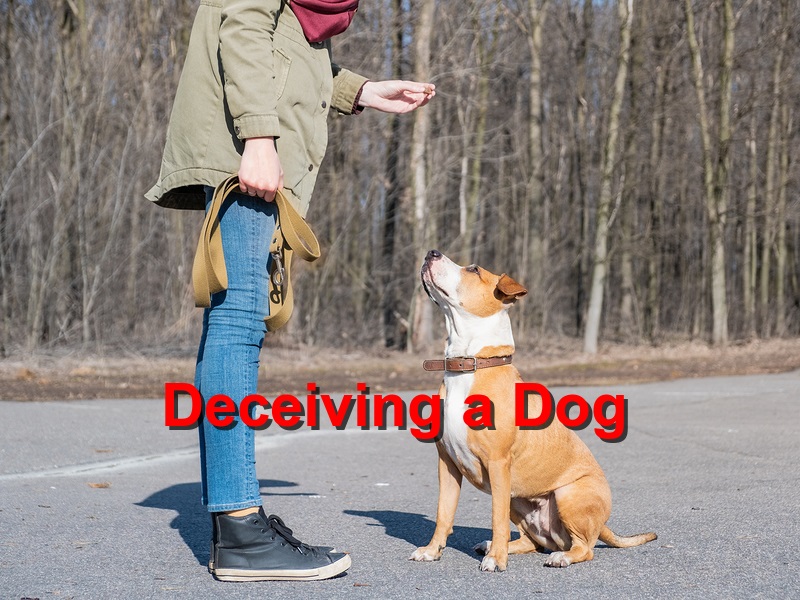
    If you don’t have clear intentions, your dog cannot tell what you really want. For instance, if you want to order your dog to sit down but you say the commands in a weak way, your furry friend will read your energy negatively as though you aren’t sure what you want. If you don’t portray confidence in your overall body language in the way you talk or walk, then your canine friend will try to demonstrate leadership because you have failed to show control.

    When you confuse your canine friend enough times, he may start to ignore you completely after being accustomed not to follow your commands. If the dog believes you aren’t serious when you make commands, then it will stop paying attention altogether. I’m sure you have heard of this statement several times – ‘’My dog just doesn’t respond to my commands?’’ This is the main reason why.

    Sending mixed signals

    Another form of dog deception that most people do and is more damaging in the long run, is when you unintentionally tell your furry friend that you are satisfied with their behavior but you aren’t happy with them. Do you still give your dog that treat even when it fails to follow your commands?

    If yes, then you are rewarding the dog for bad behavior since it didn’t follow your commands. Dogs are excellent at figuring out when they need to do to get good things and unacceptable behavior that leads to bad things.

    For the reason, you should be clear in your intentions when dealing with dogs to ensure they are obedient. You should only give your furry friends affection only when they follow your commands.

    Conclusion

    If you notice your dog is rather docile, sleepy and doesn’t respond to your orders, you should visit the vet to check whether there’s an underlying health problem.

    References: Cesarsway, Psychology Today, Dog Listener

    Copyright: Local Value

  • Canine Influenza

    Canine Influenza

    Dealing With Canine Influenza 

    Dog flu or canine influenza is an infectious viral infection that affects both cats and dogs. Currently, the most common strains of dog flu are classified as the H3N2 and H3N8 respectively. This influenza virus can easily change to new strains and can be transmitted from one dog to the next.

    Transmission

    Dog flu is usually transmitted through aerosols or droplets that contain respiratory secretions caused by sneezing, barking and coughing. Dogs that are in close proximity with dogs that have canine influenza in surroundings like groomers, shelters, kennels and day care facilities are at a higher risk of getting infected.

    On the other hand, canine influenza is spread through objects such as water bowls and infected leashes and collars. It is essential to disinfect all contaminated objects that have been used by an infected dog to prevent other dogs from getting infected.

    Similarly, if you have recently been in contact with an infected canine, you should wash your hands thoroughly to prevent the virus from spreading.

    Incubation period 

    Canine influenza has an incubation period of up to two days when on the surface, 12 hours on hands and 24 hours on clothing. It is therefore essential to implement disinfection procedures and biosecurity protocols to prevent disease transmission.

    According to experts, H3N8 virus has a long incubation period of about 5 days, and the clinical signs might appear within 2 days after exposure. Canines that have been infected might start showing difficulty in respiratory functions  between 2 to 7 days. 

    Clinical and pathology signs of infection

    Canine influenza often infects the dog’s respiratory tract and the nasal lining. An infected dog will have bronchiolitis, bronchitis, tracheitis and rhinitis. When the respiratory tract is exposed, bacterial infections in turn causes coughing and nasal discharge.

    A common clinical sign that your dog has canine influenza is persistent cough that lasts for 10-20 days despite antibiotics treatment, as well as cough suppressants. Affected dogs might have a dry cough. Other common symptoms of infection include anorexia, lethargy, sneezing and nasal discharge. Most infected dogs usually have prolonged fever and constant nasal discharge.

    Treatment

    If you suspect your dog has been infected by canine influenza, you should consult a vet who will determine the best choice of treatment. Proper nutrition and husbandry can help enhance the dog’s immune system. Most dogs usually recover within 1-2 weeks after treatment.

    Conclusion

    If your dog is showing symptoms of respiratory disease caused by canine influenza, you should consult a vet immediately to prevent exposing the virus to other pets. 

    References: AVMA, AKC, CDC

    Copyright: Local Value

  • Poodles

    Poodles

    Important information about Poodles

    Key characteristics

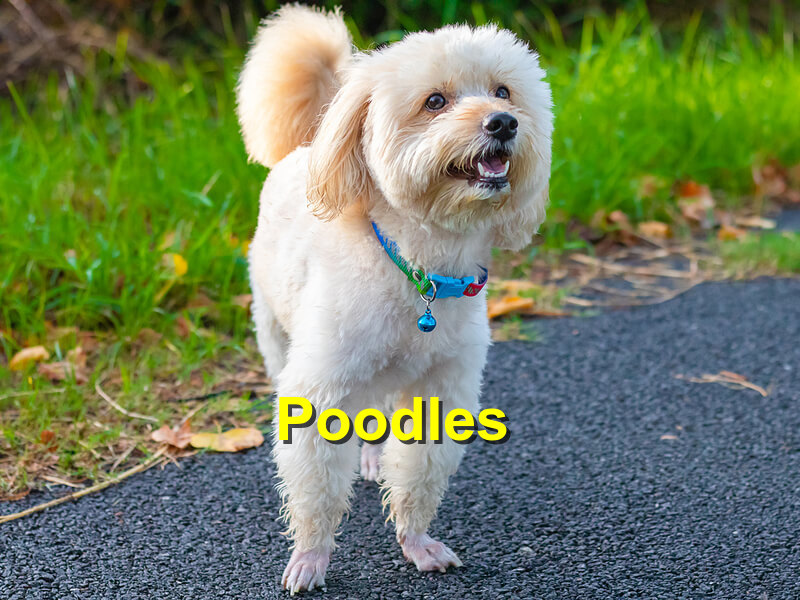
    Poodles have an extended muzzle and an oval skull. Their eyes are round shaped and are often set apart. They are either black or brown and their tail is high. Their elongated ears are flat and their coat might be curly or corded with many combinations and colors.

    Where do they originate from

    Poodle is considered as one of the oldest breed and traces its origin in Germany. Early paintings trace the origin of the breed from the early 15th century. In fact, ‘’poodle’’ describes water activity and was initially referred to as pudel, a German word.

    Poodles were often used for water retrieval and their coat was perfectly trimmed to improve their swimming ability. Poodles are affectionate pets that can also participate in obedience, conformation, rally, tracking and field events.

    Are they friendly?

    Extremely smart, poodles are easily trainable. They are playful with a happy demeanor and movement. And though they are usually less vigorous than other dog breeds, poodles require regular exercise and consistent training to eliminate unwanted behaviors. However, they are prone to suffer anxiety with harsh discipline.

    They are friendly and don’t enjoy solitude, and might suffer from extreme separation anxiety when you lock them in a kennel. What’s more, poodles can live in harmony with children and other pets but should be slowly socialized before they are allowed to meet other animals.  

    Is a poodle right for you?

    This is an active breed that needs consistent exercise to expel energy. You should take your poodle for daily walks or let them enjoy playing in water. Their great stamina means that they require daily walks and exercise. Poodles are laid-back indoors but can do extremely well in apartments. 

    Grooming needs

    Poodles have little hair and hence you don’t need to shave their coat. As mentioned above, they are excellent for people who suffer from allergies. Regularly check the poodle’s ear to remove mites and built up wax. Also try and remove the hair that grow inside the ear. Brush their teeth regularly and trim their nails. 

    Health problems

    This graceful and intelligent beauty is often affected by a variety of health concerns. They are vulnerable to allergies, ear infection, bloat, skin disease, and eye problems like cataracts.

    Conclusion

    If you are considering adopting a poodle, it is important to first consult your vet who can recommend where you can find reliable breeders.

    References: Petful, Dogtime, AKC

    Copyright: Local Value

  • Dog Energy

    Dog Energy

    Is your dog’s energy level right?

    If you have a dog, you need to know their energy level so that you can tell whether your pup needs more play time, or a short walk around the park and then take a nap. Is it possible to tell that your dog has the right energy level?

    For example, if you are considering adopting a dog, you should not settle for a specific breed but instead look for a dog that has the right energy level. So, how can you tell whether your dog has the right energy level? Here are simple ways to help you figure out your dog’s energy level.

    The type of breed matters

    A dog’s mix or breed can offer you a rough idea whether the dog you want leans toward lower or higher energy level. Siberian huskies, Jack Russel terriers, and Dalmatians are usually active with high energy levels. On the other hand, breeds like bulldogs, basset hounds, and pugs often tend to have lower energy.

    Take the dog for a walk

    A walk can help you judge your dog’s potential energy. Again, you might not be able to do this at the shelter but if you volunteer to walk the dog around the park, you will learn a lot. Does the dog try to drag you along? Or is it reluctant to take a walk? Does the dog wear out fast after the walk? This is the most direct way to judge your dog’s energy.

    Try interacting with the dog

    Dogs often act differently depending on their surroundings, who is in their presence, and whether they have been looked up the entire day or just relaxing after a long walk. If you want to adopt a dog from the shelter, you might not have the chance of observing it in it’s true element. Put simply, you cannot perform a ‘’test drive’’ to get a rough idea of the dog’s energy level.

    As an example, a calm dog can be laid-back in a hectic dog pound. But dogs that run and bark when there is hardly anyone around are undeniably energetic. Therefore, if you want to adopt a dog from a breeder, then you have the chance of first interacting with the dog. Find out if you can visit the shelter before walk time and observe how the dog responds to strangers, or interacts with the groomer. 

    Conclusion

    If you get an active dog from the shelter and after a few days it suddenly becomes calm and laid-back, it is advisable to visit the vet to check whether the dog is sick.

    References: Cesarsway, Dogtime, Petsplusfl

    Copyright: Local Value

  • Yorkshire Terriers

    Yorkshire Terriers

    Characteristics of the Yorkshire Terriers

    This breed has a large personality but has a tiny body. Read on to find out what makes this dog an excellent choice of pet. 

    1. Key features of Yorkshire Terriers

    The Yorkshire Terrier is usually kept as a toy breed by many homeowners. While it’s tails is normally docked, some European countries don’t allow this practice. Their coat is silky and often comes in varying colors of tan and steel blue. The coat can be clipped short to allow easy maintenance.

    2. Where do they originate from?

    The breed traces its origin in Scotland but later migrated to England. People were very fascinated with the canines’ coat and often made sarcastic remarks. However, despite this perception, this dog breed later flourished and become popular in England and beyond.

    The dog was helpful in dealing with rats and mice from the mills. Due to its small shape, it could easily fit in animal burrows and chase out rodents. The dog was also useful in keeping vermin at bay, especially at the weaving mills. The American Kennel Club recognized the breed in 1885.

    3. Are they friendly?

    Their small physique should not fool you. Although they might have a small stature, they have a big personality. Proper training will prevent them from becoming unruly or snappy. They are difficult to train so that they can live indoors with other pets.

    They are energetic, curious, affectionate and brave companions. And somewhat surprisingly, they are excellent watchdogs as well.

    4. Should you get this dog?

    Due to their small stature, this breed requires limited exercise. Ensure you play with them daily and take daily walks with them to expel built-up energy. The dog is active indoors but suitable for indoor living. 

    They are active indoors and suitable for apartment living. However, they have high grooming needs. While they don’t shed a lot of coat, you still need to brush yours regularly. Otherwise, the coats can become tangled and painful when combing.

    They are also vulnerable to get dental problems and therefore you have to brush their teeth on a daily basis. Additionally, trim their nails and remember to also clean their ears properly. In hindsight, this is an excellent dog for those with canine asthma and allergies.

    Conclusion

    You can consult a vet if you need recommendation on where you can adopt one. Alternatively, you can check with breeders and rescue groups as puppy mills have become widespread.

    References: Petful, AKC, Dog time

    Copyright: Local Value

  • What dogs feel for you

    What dogs feel for you

    What Dogs Feel For You

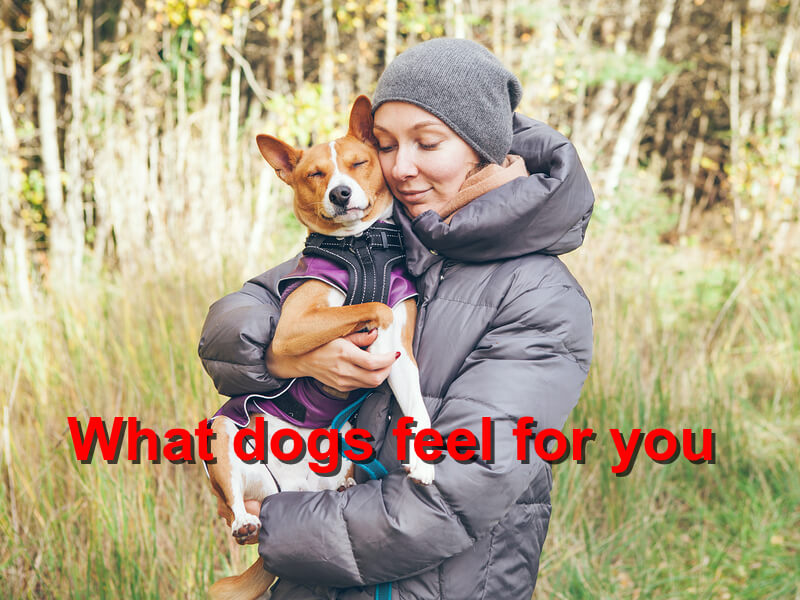
    Most pet owners often ponder what their dogs think about them when they look at them with their loving, wide eyes. You might wonder, ‘’ What are they thinking?”. Recent studies have now helped up us move closer to finding an answer to this common question. Two researchers recently did a study to find out if canines have the ability to express empathy – the capability of understanding emotion.

    According to the study, many people believe that their dog actually has the ability to comfort them. But while all not dogs can show comfort, they are not hard-hearted either. Essentially, dogs can show a lot of care in many ways than most of us assume.

    How the dogs responded to the study

    Researchers recently gathered a variety of untrained pets that mainly consisted of mixed breed, which were then divided into groups of two – males and females. Then they requested the presence of the dog’s owner as well as a stranger who had never met the dog. The stranger and the owner would alternatively hum, cry or talk in a strange way. The researchers simply wanted to check how these dogs reacted to the sound.

    The dogs did respond well to the sounds that even came from strangers. As a result, the researchers believed that this was a way the dogs used to express empathy. Additionally, the researchers believed that when the dogs wanted comfort they would seek out their caretaker. But the study ultimately raises a number of questions. Do dogs express emotions like anger or pleasure? And how do they respond to children.

    Dogs and their owners enjoy a healthy symbiotic relationship

    Nonetheless, recent findings show that dogs and their owners usually have a strong bond. And though more research is essential to determine ways of strengthening this bond, we definitely benefit from a healthy symbiotic relationship with our dogs.

    While there is no definitive way to explain how your dog feels for you, the joy and companionship you get from your canine friend speaks volumes. More importantly, dogs not only endure hostile environments but also seem to enjoy it as well. And you might wonder, what do dogs think in such situations?

    The research also shows that dogs are more responsive to information that comes from us, as opposed to sounds from inanimate signals such as bell. Put simply, dog enjoy our presence as much as we enjoy theirs. 

    Conclusion

    Although dogs have the ability to show empathy, they can be jumpy and aggressive when they are sick. For that reason, you should take them to the vet when you spot a change of behavior just to be on the safe side.

    References: Cesars way, Discover magazine, Huffpost

    Copyright: Local Value

  • French Bulldogs

    French Bulldogs

    Common Traits Of French Bulldogs

    Key characteristics 

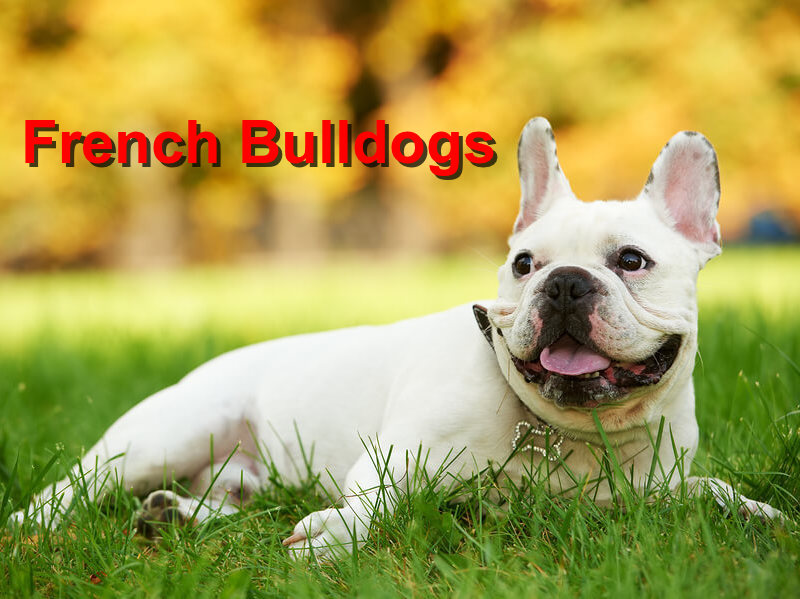
    The playful French bull dog is small, muscular and compact. These dogs normally have an evenly shaped head and bat-like ears. Additionally, they have a unique underbite. Their body is pear-shaped and often appears wider when you look at it from the front.

    Their loose skin forms wrinkles, especially around the shoulders and head. Frenchie bull dog’s tails also appear corkscrew or straight.

    Where they originate from

    This breed traces its origin in England back in the early 19th century. French bulldogs initially were a preferred alternative to the larger and heavier English Bulldog. More importantly, Frenchies were beloved by lace-makers who existed in that period.

    But with the onset of the industrial revolution, most artisans were jobless and subsequently relocated to France, carrying with them their dogs. With time, the bulldog became increasingly popular. And the Frenchie became more developed as characterized by the bat-like ears. Although most Frenchies nowadays have batlike ears, the original breed had rose-shaped ears.

    Gradually, when more Americans moved to France, they developed a liking for the breed and ultimately it become popular in most homes in the United States. Frenchies remained popular among many Americans but their popularity and numbers began to decline after the word war. It is now considered a rare dog breed but recently made a comeback.

    Are they friendly?

    The French bulldog is an awesome companion and was actually bred for this purpose. The beloved dog can gladly share with you the sofa as you enjoy your favorite show, and can even share your warm bed at night.

    Frenchies are curious and playful and can easily get into trouble without close supervision. Generally, they interact well with other household pets and are affectionate toward strangers. Frenchies also need regular companionship. You should never leave them in isolation for a long period of time.

    Exercise needs

    Frenchie bulldogs can live comfortably in a house or apartment that has a yard. Ensure you engage your dog in regular walks to keep them from being bored and keep obesity at bay. But you should avoid walking your Frenchie in extremely hot days. Also ensure you keep them indoors during the cold days.

    Conclusion

    Frenchies without a doubt need comfortable homes. If you decide to adopt one, make sure you do your research to avoid falling prey to dealers that run puppy mills. As a word of caution, you should consult a vet to instruct you on what to look out for if you want to get a Frenchie.

    References: Petful, AKC, Dogtime

    Copyright: Local Value

  • Confident Dog

    Confident Dog

    How to Make Your Dog Confident

    If your dog is timid, there is no need to worry as there are ways you can make it more confident. While some dogs are usually shy since childbirth, others may have experienced terrifying events that made them timid or fearful. Here are some of the ways that can help your dog gain some confidence.

    Where does the fear originate from?

    When puppies are between 7 and 10 weeks old, they often undergo a critical socialization period. During this period, the brain is still learning how to build associations, and it’s a time when dogs are vulnerable to develop phobias or fear.

    In most cases, dogs develop fear when something scared them during their socialization period. Due to this, the dog might become fearful of a certain thing, or may become nervous or timid in general. These timid or nervous dogs can get help from confidence-building workouts that can eliminate the fear that is commonly attached to multiple things or situations.

    Are confidence-building workouts effective for dogs?

    To build confidence in dogs, counter-conditioning training or confidence-building exercises are recommended. But how do these exercises really work? Well, these exercises can desensitize your dog by exposing it to the stimulants that make it fearful, be it fireworks, children, strangers or loud noises.

    Similarly, these confidence-building exercises can help develop the dog’s behavioral response to any objects that cause fear in your dog. For instance, when your dog has a phobia for strangers, the exercises will prevent the dog from becoming fearful by working on activities, like playing with a ball.

    How you can desensitize your dog from fear-inducing stimuli

    A great way to desensitize your dog from fear inducing stimuli is by adding a reward during the counter conditioning exercises. If you want to give your dog treats during training, then you should ensure the treats require minimal chewing. When your dog completes a specific exercise successfully, you can offer him a reward. If you want to effectively desensitize your dog from the fear-inducing stimuli, you should reintroduce the dog to the fear stimulus at a safe distance.

    For example, if your canine is scared of fireworks, you can play a soft recording so that the dog isn’t scared. Hold your dog with a leash and using a safe volume, when the dog is not showing any symptoms of fear, request your dog to sit calmly and pay attention. If the dog responds positively to the request, offer them a treat.

    Conclusion
    Remember that your dogs need patience and compassion. If your dog is too sick to undergo these conditioning exercises, you should consult your veterinarian immediately.

    References:  PetmdDogster, Puppy leaks

    Copyright: Local Value