


Category: Dogs

  • How to Make your Garden Dog-friendly

    How to Make your Garden Dog-friendly

    Look around. Roses are blooming, oaks are budding, and finally, days are now longer than nights. This means a couple of things; among them, we can now take our barking buddies out for longer and more frequently. Besides, this is also that time of the year when you can renew the foliage in your backyard, especially if you’re thinking along the lines of the flowers and plants you’d love to have in it. There couldn’t be a better time to start a nursery than this coming few weeks. And the good news is that now your four-pawed furry mate can join you. Having said that, here are a few tips on how you can make your backyard dog-friendly.

    Weed Out any Potentially Injurious Plants

    As much as plants and flowers might seem beautiful and eye-catching, a few of them can be toxic to dogs. These include plants that have tend to have sharp thorns or lots of intricate spines on them – to avoid any piercing or accidental eye injuries.

    Craft an Area Border

    Typically, chances are you have a few places that you’d want your dogs staying out of; these are places like rocks, driftwoods or aquatic pools. It is advisable to construct appealing borders around such places to reduce the chances of your pet wandering off to such off-limits areas.

    Designate a Specified Toilet Area

    Not only will a designated bathroom area simplify your daily or weekly yard cleanup regimen, but it is also an excellent way of enforcing discipline and good behavior in your furry buddy. What’s more, it also spares your well-manicured lawn from ‘burns’ from urine. Furthermore, this kind of training can be done with all dogs except the very young puppies. Speaking of which, it helps to bear in mind that some dogs are generally fast-learners than others. There’s no specific timeline when your pet should learn this kind of bathroom mannerism. Nonetheless, with a little consistency and patience, he can learn it sooner rather than later.

    Designate a Place he Can Dig Occasionally

    Instinctually, most dogs like to dig. It is not surprising that any dog owner with a backyard can attest to the havoc that their barking buddy may have caused in their garden at some point. However, it is easier to redirect these tendency than to try to stop it altogether. You can do this by setting apart a section of your garden for Tommy or Furry to dig whenever the digging bug bites him. SOURCES:

    SOURCES: Telegraph, Sunset

    COPYRIGHT: Local Value

  • What You Need to Know about Ear Mites in Pets

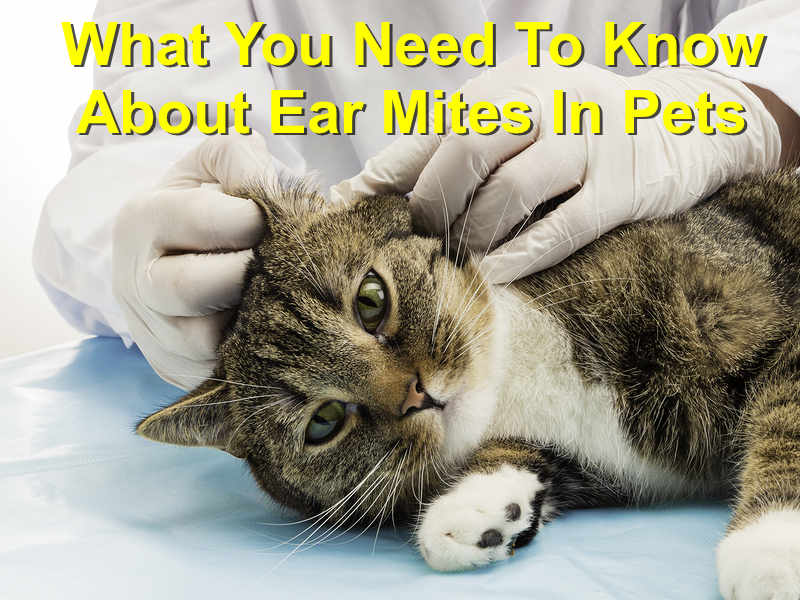
    What You Need to Know about Ear Mites in Pets

    Ear mites are without a doubt one of the major parasite problems afflicting pets nowadays. Also known as Otodectes Cynotis, ear mites have grown to be quite common and pervasive in the past five years. Usually, most pets (dogs and cats) can tolerate these parasites without any major complications. However, the problem starts if the afflicted pet has a hypersensitive reaction that results in hematoma and excessive skin irritation. In line with this, here’s a quick guide on all you need to know about ear mites. 

    1. What Causes Pet’s Ear Mites?

    Generally speaking, ear mites are typically spread and transmitted via mutual socialization with cats and dogs. Especially if your pets spend a lot of time outside.

    Generally speaking, ear mites are typically spread and transmitted via mutual socialization with cats and dogs. Especially if your pets spend a lot of time outside. 

    2. How Can You Tell that Your Pet Has Ear Mites?

    Physically, ear mites are tiny – almost microscopic. If you’re lucky, you can chance on them as an array of glistening – almost shiny – white dots that tend to scurry away when

    Physically, ear mites are tiny – almost microscopic. If you’re lucky, you can chance on them as an array of glistening – almost shiny – white dots that tend to scurry away when a light is shone on them. But this is just the tip of the iceberg – usually, ear mites hide in thousands deep inside the ear canal, making it virtually impossible to see them without the aid of specialized equipment. To rule out the possibility of ear mites in your fur buddy, visit a vet and let him conduct a thorough otoscope analysis in the pet’s ear canal. It is only this way that you can rule out the possibility of mites infestation.

    3. What are Some of the Common Symptoms of Mites Infestation?

    Some of the tell-tale signs of a possible mite attack revolve around frequently shaking the head, scales, and

    Some of the tell-tale signs of a possible mite attack revolve around frequently shaking the head, scales, and crustings on the neck, excessive scratches and abrasions on the underside of the ears – as a result of frequent scratching. Others include generalized itching especially around the head and coffee ground-like pimples and bumps inside and around the ear canal.

    4. How to get Rid of Ear Mites.

    Since the infection and mites infestation is highly contagious, it is recommended that all household pets be subjected to the same treatment to lessen the chances of cross-transmission. Start by cleaning the pet’s ears thoroughly with a commercial liquid ear cleaner. It is important to ensure that you use the correct formulation – whether you’re dealing with dogs or cats. That being said, the application of these ear parasiticides ought to be repeated every 10 – 14 days until the mites have been eradicated. The same applies to the thorough cleaning and fumigation of the pet’s kernel or resting area. Take advantage of the fact that mites do not survive for long outside a pet’s body.

    SOURCES: Petful, Blue Cross

    COPYRIGHT: Local Value

  • The Little-Known Heartworm Symptoms

    The Little-Known Heartworm Symptoms

    Why You Should Always be on the Lookout for this Silent Killer

    The little-known heartworm disease is caused a parasite transmitted mainly by mosquitos. Although seemingly harmless at first glance, it can quickly gravitate to a life-threatening complication if left untreated for a long time. And all pets ( be they dogs, cats or otherwise ) are still at risk of this ailment, despite the fact that very efficient and potent control and preventive medication are available in the market. Fortunately, however, more pet owners are waking up to the realization that heartworm disease is majorly a surreptitious type of ailment rather than a boisterous one. In other words, you have to pay extra close attention to your pet to catch these symptoms early enough, which most often than not is almost impossible.

    That being said, early signs of an imminent heartworm disease include; slight fatigue and excessive panting. This is then usually followed by extreme exercise intolerance, a stubborn cough that refuses to go away, then eventually sudden death. As you can see, none of above symptoms are exactly exclusive to heartworm disease, which makes the complication even harder to diagnose and treat. And considering that mosquitos usually spread the causative agent, then pets living in the tropics are generally at a higher risk than those in more temperate regions. Unlike you, pets are more exposed to bugs and insect bites hence the likelihood of being infected is also quite high.

    Preventive Measures

    The good news, amidst a haze of an almost hopeless situation, is that heartworm disease is easily preventable. For starters, put your pet on a preventative medication regimen throughout the year, especially if you live in an area that is rampant with mosquitos. Secondly, minimize your pet’s exposure to mosquitos by keeping them indoors especially just after dusk when mosquitos are likely to be feeding. Most importantly, adopt an effective way of eliminating mosquitos around your home’s vicinity by weeding tall grass, draining any stagnant water and making proper use of pesticides.

    Testing and Diagnosis

    Your vet can easily test whether your dog or cat is infected with the disease during the routine annual, bi-annually or monthly check-up. It is advisable to cultivate the habit of testing for this disease regularly especially considering its almost symptomless nature. A negative test, in such occasions, is always a good sign particularly if your dog is already on an all-year round prevention plan. Nonetheless, it is easy to treat heartworm disease if it is caught early enough.

    SOURCES: Petful, Pet MD
    COPYRIGHT: Local Value

  • National Lost Pet Prevention Month

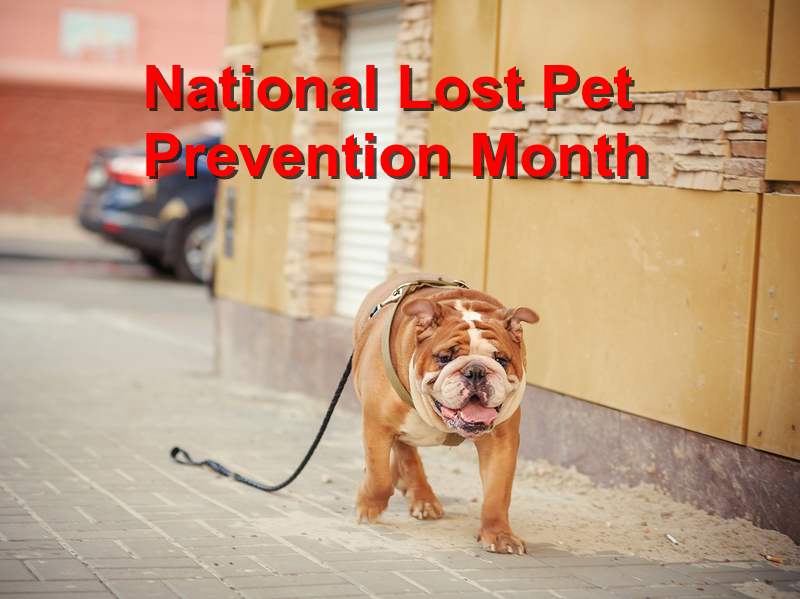
    National Lost Pet Prevention Month

    It is estimated that a pet gets lost every two seconds in the United States.

    And this is not surprising considering that statistics indicated that over 10 million pets will go missing every year. And apparently, only one in every ten such cases of pets going astray will reunite with their loving pet parents. In fact, a good chunk of them will wind up dead, get stolen or killed in traffic snarl-ups. It is for reason that PetHub Inc dedicated the month of July as the National Lost Pet Prevention Month in a bid to raise awareness of this appalling statistics. Every July each family with a feline or Fidos under their roof is encouraged to enforce measures that will ensure that their pet does not end up among the 33% of all dogs and cats that get lost at some point in their lifetime.

    In line with this, here a few handy pet loss prevention measures that you can take into consideration this year July.

    Keep them on a Leash

    One of the easiest and most practical ways of minimizing the chances of your barking buddy straying off is by keeping them on a comfortable leash or harness. And the leash ought to be always on, regardless of whether you’re just going for a short stroll to the mailbox or on a trip out of town. Remember that most pets are naturally inquisitive by nature; what might appear as a short dash after a stray squirrel might end up being a gruesome 6-hour long search. Keep him on a leash, always.

    Get your Pet a New Identification Collar

    A good collar is the best line of defense against accidental pet loss for two reasons. For starters, it effectively lessens the chances of your pet slipping off his leash. Secondly, a well-labeled collar makes recovering your pet remarkably easy in case he wanders off to another person’s home. What’s more, you can also have their collar fitted with a RFID microchip to make tracking them down far easier should they wander off accidentally. Alternatively, the chip can also be implanted directly under the animal’s skin.

    Obedience Training

    Nothing can forestall losing a pet more effectively than proper discipline and obedience training. Bear in mind that it is several times easier to lose an undisciplined pet than one that has been raised and taught to recognize and obey simple commands. Not to mention that highly disciplined and obedient pets will rarely stray or wander off even in the absence of a leash.

    SOURCE: Cat tipper

  • July 4th and your dog

    July 4th and your dog

    How to Help Them Survive the Fanfare Galore

    Fourth of July comes with a couple of things. Among them, barbecues, a sunny day spent at the beach, quality time spent with friends and family, and of course, plenty of fireworks. The commemoration of the birth of this nation is typically characterized by the sound of firecrackers, fireworks, and the smell of burning pyrotechnics. That is, aside from the long day spent away from our usual busy schedules or that annual family get-together that also coincides with this grand day. This year’s 4th of July celebrations would probably be any different. So, whether you’re planning to spend the day at home unwinding or catching with old friends at the local tavern, there are several things that you ought to be aware of.

    For starters, unlike human beings, pets – especially dogs – don’t necessarily associate the flashes, noise, and the cracking pyrotechnics with fanfare, galore and celebrations. In fact, most of them often to panic and are always terrified of the bangs, loud whizzes, and the confusion that follows such a spectacle.

    Secondly, the AHA ( American Humane Associations ) recently issued a statement reporting that the week after the Fourth of July celebration is often one of the most harrowing and gruesome for pet owners and animal shelters. Why? A good number of pets wind up lost, killed or injured after running and panicking at the startling noise of firecrackers.
    This year, however, you have the chance to take the following measures before its too late. Here are some of the ways of ensuring the safety of your four-pawed barking buddy amidst the 4th of July fanfare.

    1.Keep your pets indoors for the whole day, if possible. Minimize loitering and avoid going for a stroll despite that you might get some time for that.

    2. Don’t take your pet with you for a fireworks display or any occasion that is expected to feature pyrotechnics. Leave them at home with a suitable handler.

    3. It is also that time of the year of making sure that little Tommy is correctly identified, just in case they get lost or break loose from your leash in the course of the day.

    4. Keep your dog away from any jewelry. This applies mostly if you decide to let them stay indoors with you. Your pet could easily chew up and accidentally swallow your plastic adornments without you realizing.

    5. If you’re having a barbecue or throwing one of those common 4th-of-July parties, refrain from giving your dog ‘table food’ or any leftovers for that matter.

    SOURCE: American Humane Association, Pet MD, Cesars Way
    COPYRIGHT: Local Value

  • Take Your Dog To Work Day

    Take Your Dog To Work Day

    To most of us lucky enough to have a 4-pawed furry companion, our barking buddies are more than just the Official Fetcher of Tennis Balls and Frisbees. They are also excellent listening friends, especially when you need to vent, unwind and take something off your chest. They wouldn’t also mind watching a movie with us every-once-in-a-while. But more, importantly, the unparalleled/valuable companionship that they extend us ought to be reciprocated by rare treats every once in a while. And how about we show them what it is like to bring home the bacon this summer for a change? So, mark your calendars this year on June 23rd, it is PSI’s Take Your Dog to Work Day.

    The Background

    PSI ( Pet Sitter International ) started this day almost 20 years ago in 1999 as a way of promoting a deep integration of our four-legged companions in our day-to-day lives. Ever since then, dog owners have been encouraged to bring their barking buddies to work and let them have a glimpse of the modern day rat race. Customarily, it is commemorated on the first Friday after Father’s Day in a national event that also seeks to promote puppy adoptions from rescue centers and shelters, for those who are yet to own one.

    Apart from taking your canine to work, you can also contribute to this day by;

    1. Organizing a Dog’s Welfare Fundraiser at your Place of Work

    In between hectic schedules and impossible personal goals, it would feel nice and refreshing to slice off some time and organize a fundraiser to raise funds to go a welfare kitty for a nearby local dog shelter. Remember that these shelters and animal homes play an invaluable role in ensuring that our streets are safe, clean and not littered with homeless puppies. Sparing a dollar or two won’t hurt but will go a long way.

    2. Adopt a New Puppy

    Puppies are not only cute and adorable but also loyal, playful and double up as excellent companions. If you don’t have one yet – or feel like it is time you add a new one to the family – then this is the opportune time to visit a shelter and adopt a furry friend. And while at it, remember to have them vaccinated against common communicable dog diseases such as rabies and also have the sterilized.

    The best way of extending your love and appreciation to your dog for their priceless presence at home is by carrying them to work on Friday, June, 23rd this year.

    SOURCE: Pet Sitter, Dog Tipper
    COPYRIGHT: Local Value

  • Father’s Day and Dogs

    Father’s Day and Dogs

    Let’s take a minute and appreciate all men out there who are not just fathers to their cherished kids but also dog dad’s as well. These are dads who have to put up with not-so-pleasant motherpupper’s antics every day but still love their dogs all the same. We all know that a dog is man’s most faithful friend. As such, if he loves and has a special bond with his cute pup, why not just get him something special. If possible, something that he can share with his adorable canine persuasion. There are several things you could do to appreciate our dog dad’s this coming father’s day. Here are a few suggestions.

    1. Get them a Thoughtful Gift

    It could be anything practical (dads are practical!), ranging from a front pocket handy metro sling to a beer cozy. The sling, for instance, is perfect for that dad who is always on the go. It can hold an iPhone 6+, poop bag, wallet, treats, etc. It is an excellent accompaniment of routine dog walks, hiking excursions or just a stroll to the local coffee joint.

    2. Get them a Customizable Card

    Dads love cards too. And what’s a better way of lightening up their mood than by sending them a card on behalf of their trusted four-pawed companion? Yes, this could actually go a long way in making their day.

    3. Bring Frisky in for their Annual or Monthly Checkup

    This is the best time of the year of taking the load off daddy’s shoulder and relieving them from the responsibility of bringing in Frisky, Ruff or Tommy in for their monthly/annual vet checkup. Fathers, despite being some of the most occupied and busy members of the society, will still find some time to bring in their beloved pets in for checking. And this is an opportune time of reciprocating this by following dad’s admirable example.

    SOURCES: Pettura, Bark Post, I Heart Dogs
    COPYRIGHT: Local Value

  • Useful Tips for Managing your Pets This Memorial Day

    Useful Tips for Managing your Pets This Memorial Day

    The long anticipated Memorial Day Weekend is just a few days away. Often seen by most people as the unofficial start of the fun-filled summer months after enduring the long cold wintry season, the Memorial Day Weekend is the perfect excuse for spending quality time outdoors with your loved ones. And what’s a better a way of doing that than also tagging your cherished four-legged companions along? Whether you’re barbecuing, partying or just up-and-about soaking in those glorious sun rays, your pet will also love to be there too! Nonetheless, it is still important to stay safe as much as you’re having a ball in your backyard. Here is a quick primer of a collection of useful tips that could come in handy in preventing mishaps during this year’s ‘Dog Days’ weekend.

    1. Protect your Pets from Potentially Toxic Foods
    Remind your guests to refrain from feeding your pets table scraps or party snacks. Chocolate, raisins, chocolate, avocado, grapes, and onions are examples of barbecue additives that are considered potentially toxic to certain breeds of dogs.

    2. Don’t Leave Pets Unsupervised
    Pets, like toddlers, should never be left unsupervised while in the presence of potentially hazardous areas. Contrary to the common misconception, not all dogs and cats are good swimmers. Avoid leaving your pets near large pools of water/lakes/waterfalls. Speaking of which, make sure that your four-pawed companion has proper identification on them ( ID tag or an embedded microchip ) before you venture outdoors.

    3. Be Mindful of the Heat Levels
    Pets also get dehydrated quickly especially after spending endless hours outdoors. Ensure you have enough packed clean, fresh water for them and encourage them to take intermittent breaks from direct sunlight in a cool, shaded place. To add on this, discourage nibbling around by packing a few hearty snacks for them in addition to their water ration. Party smart.

    SOURCES: Pet 360, Dog Time, Dog Tipper
    COPYRIGHT: Local Value