Category: Cats

  • Pet Friendly Thanksgiving Foods

    Pet Friendly Thanksgiving Foods

    Thanksgiving is almost here and while we are busy preparing for the festive holiday, there are some precautions to look after when it comes to pet safety. Thinking of keeping your pets safe isn’t exactly the first priority you think about on a holiday but the food that falls on the floor may be toxic to your pet. That is why we will go over a few foods that are pet friendly, as well as foods that are “not so” pet friendly. Let’s take a look.

    Pet Friendly Thanksgiving Food

    1. Turkey Breast – If your cat or dog does not have food allergies, it’s safe to give (just a small amount) of some turkey breast to them. Just do not give them any skin, bones, gravy, etc. Just turkey breast and a little bit would be a great treat for them.
    2. Vegetables – Every dog ever owned has loved vegetables. Most of them are wonderful snacks for your fur babies. Just make sure there is no butter, gravy, cheese or any sauce that could be potentially harmful to your pets. You could give them some carrots, broccoli or sweet potatoes and they’ll love it! They are essential in fiber and will keep your pet fuller longer.
    3. Salmon – If you’re serving appetizers then pick up a salmon plate! A small amount would be the perfect treat for your dog or cat and they’ll love you for eternity (or until you give them more salmon).

    “Not-So” Pet Friendly Thanksgiving Foods

    1. Turkey Skin – As mentioned above, turkey breast can be a great treat, but keep the skin away.
    2. Cooked Bones – Don’t question it, just don’t give them any cooked bones. When a bone is cooked, it becomes very easy to break and can splinter into your pets mouth, throat, or intestine, causing harm to your pet and costing you a pretty penny at the vet.
    3. Chocolate – All pet owners know not to feed chocolate your your pets as it can be extremely toxic. We would never intentionally feed our pets chocolate, however it’s important to keep in mind. Keep chocolate away from your pets and encourage your guests to do the same. Candy bowls could be potential targets that your pets would want to get in to.

    SOURCE: Pet Health Network
    COPYRIGHT: Local Value LLC

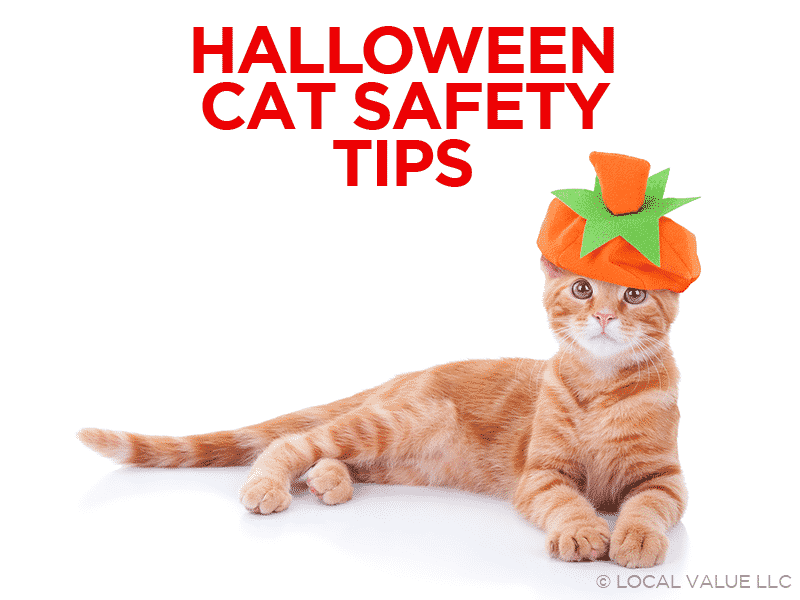
  • Halloween Cat Safety Tips

    Halloween Cat Safety Tips

    Halloween can be a fun event for families and their pets. However, if you don’t take the correct safety precautions, it can also be very dangerous for our wet-nosed furry friends. Let’s take a look at some life saving tips that can help your pet this Halloween!

    Keep your cats inside

    According to Pet Health Network, “If your cats aren’t already indoor-only cats, be sure to keep them inside on Halloween night, so they are not terrified by all of the scary Halloween trick-or-treaters. With lots of scary noises and children in costumes shouting “Trick or Treat,” even indoor cats can become frightened. Many pets are lost each Halloween when they get scared and dart out of open doors, so keep your cats safe and away from the commotion by keeping them in a back room.”

    Another thing is to consider is to make sure your cats have a collar with an ID tag. It’s always a good idea to make sure all info is updated and all info is not worn off the ID tag (if it’s old). If your cat hasn’t had a microchip implanted then you might want to consider it in case your furry friend runs away. Always better to be over prepared than underprepared.

    Halloween Decorations and Fire Hazards

    If you like to decorate your home in the Halloween spirit, take into consideration what you’re putting on display and where the decorations will be placed. Easy-to-reach decorations — or candles — can be eaten or knocked over, potentially leading to choking, foreign body ingestion, electrical shock and even burns and a household fire. To be safe, make sure all decorations are safely out of reach of all pets.

    Keep candy out of your cat’s reach

    Halloween candy can be very dangerous for cats, especially chocolate and xylitol! Most people think this is something only dog owners need to worry about, but unfortunately, cats can eat candy too. Most people know that chocolate is extremely toxic to pets but few people know that candy sweetened with xylitol, like sugar-free gum, can also be very dangerous. Xylitol causes insulin release and low blood sugar levels and can lead to liver failure. Be sure to keep all Halloween candy away from your pets. Every last piece of it. You know how curious your cat is and you know they can open the wrapper. (Cats are experts at that you know) If your cat manages to steal and eat candy, immediately call us right away or take your cat to a veterinary emergency clinic.

    SOURCE: Pet Health Network
    COPYRIGHT: Local Value

  • Why Your Cat Is Good for Your Health

    Why Your Cat Is Good for Your Health

    We could go on and on about why cats are such delightfully amazing pets. Think about it. They’re the perfect low-maintenance companions. Besides being adorable, they also give you a warm, happy welcome when you come home (but on their own accord of course).

    Simply owning cats is good for your health, too.

    When you think of things that can help you get healthier, you don’t really think about cats that much. However, health professionals and researchers are finding that owning a cat can actually benefit your health. You can enjoy a number of benefits from cat ownership.

    How Are Cats Good For Your Health

    Reduces stress, anxiety, and depression – It’s no secret that millions of Americans suffer from stress, anxiety disorders and/or depression. Having a cat has many psychological benefits, and one of those is relieving stress, anxiety and depression. Being able to care for an animal, or having a cat snuggle with you, can help you feel better, and reduce your level of stress.

    Helps you recover more quickly from sickness or accidents – ‘Cat rehab’ has great health benefits and has even been found to comfort cancer patients. See, your cat is more than just a cute ball of fur. They help reduce, blood pressure, and risk of stroke as well.

    Gives free therapy – A kneading massage, warm body heat, and the vibration from purring make cats the perfect therapeutic healing tool.

    Improve your mood: In many cases, interacting with a pet can help improve your mood. This includes cats. Owning a cat can help you feel better in general, boosting your mood. If you are looking to see mood improvement, a cat can help with that.

    Reduced loneliness: Many who have feelings of loneliness can find relief with a pet. Cat companionship can help those who are lonely feel a connection with another life. Just having a cat to come home to and spend time with can help those who are single, or widowed.

    SOURCE: PetSafe
    COPYRIGHT: Local Value

  • 10 Tips To Being A Responsible Pet Owner

    10 Tips To Being A Responsible Pet Owner

    What does it mean to be a responsible pet owner? I’m sure if you asked fifty people, you would get fifty different answers, but the overall outlook would be roughly the same. We want nothing but the best for our fur babies…even if that means restricting them from table scraps, limiting their toys, etc. Here are 10 tips to being a better, more responsible pet owner.

    1. Carefully choose your dog. Don’t purchase a puppy because they are cute. Your dog selection should be based on your lifestyle.
    2. Socialize your dog.  Make sure your pet is socialized and if your dog is a puppy, make sure to socialize them. The goal is to make your puppy comfortable and at ease around other people and animals.
    3. Don’t threaten your dog. Don’t put your dog in a position where it feels threatened or teased.
    4. Train your dog. Basic commands are always a work in progress so don’t think you train them and that’s it. Continue to stimulate Fido’s mind with commands like “sit”, “stay”, “leave it”, “come”, “take nicely”, etc.
    5. Excercise.  Exercise your dog regularly and they will thank you! It will keep them healthy and stimulate them mentally.
    6. Not too much action.  Avoid highly excitable games like wrestling.
    7. Leashes.  Use a leash in public to make sure your dog is controlled at all times. You are in control of your dog and you want that to show to others.
    8. Keep your dog healthy. Make sure your pets vaccinations are ALL up to date. If you can’t remember when your dogs shots where, contact us.
    9. Spay or neuter your dog. If you decide to spay or neuter your dog you have options. Give us a call and discuss your options with us so you can make a decision that is right for you, your family and your dog.
    10. Fence your dog.  If you have a fenced yard, make sure the gates and fence are secure. You don’t want your dog to run out in the street and risk getting hit by a car or even taken. There have been cases of dogs running away and other people taking the pet tag off and keeping it so don’t run risk!

    SOURCE: AVMA
    COPYRIGHT: Local Value

  • 6 Tips For A Happy & Healthier Cat

    6 Tips For A Happy & Healthier Cat

    It’s Happy Healthy cat Month and there are many things we as pet owners can do to assure our best friends are happy and healthy.  As a veterinarian, pet owners often ask us what they should be doing in order to help keep their pets healthy. To help others with similar concerns what follows are my top six pet health tasks to promote the well-being of your cat.

    1. Yearly veterinary examinations – Annual examinations are as essential as food and love. Don’t wait for your feline to be sick before taking him to the veterinarian. Bring your cat in for a wellness exam at least once a year. Older pets and pets with medical issues may need to be seen more frequently.
    1. Dental care – Commit to keeping your cat’s teeth clean and healthy. What does this entail? First, take your kitty to the veterinarian for a checkup and cleaning if necessary at least once a year.
    1. Vaccinations  – Most people wouldn’t skip vaccinating their kids and shouldn’t overlook vaccinating their pets. Immunizations protect our pets from devastating diseases caused by viruses and bacteria.
    1. Microchips – If your cat doesn’t already have one, make sure you microchip your pet. While collars and ID tags are important, they are not a guarantee that your pet will be returned home if they ever get lost.
    1. Spay and neuter your cat – Besides helping prevent cat overpopulation and being the responsible thing to do, spaying and neutering your dog or cat has important health benefits.

    Follow these tips and enjoy Happy Healthy Cat Month all year round. Always reach out to your local vet if you have any further questions on your cats wellness and happiness.

    SOURCE: Pet Health Network
    COPYRIGHT: Local Value

  • 5 Labor Day Tips for Pets

    5 Labor Day Tips for Pets

    It’s not just humans who love the summer. Our pets love the summer just as much as we do. Our dogs love to bask in the sun as much as swimming, running or just enjoying a nap in the yard with the family. There are some tips to make sure your Memorial Day doesn’t get out of hand.

    1. Think twice about giving that bone to your dog

    While it’s very tempting, it can also be life-threatening. Along with bones, BBQ bits, like gristle and fat should never be given to your dog. Certain breeds and dogs that are overweight are subject to pancreatitis.

    1. Make sure your pet has plenty of fresh water and shade

    Our pets, especially dogs, get much thirstier than we do when they get hot, and other than panting and drinking, they really have no way to cool themselves down. Get your pet in the shade as often as possible. While dogs and cats like to sunbathe, direct sunlight can overheat them (especially dogs) and cause heat stroke.

    1. Never ever leave your pet in the car

    It can take minutes – yes, MINUTES – for a pet to develop heat stroke and suffocate in a car. Most people don’t realize how hot it gets in parked cars.

    1. Keep pets away from fireworks

    For us, fireworks are the highlight of the night, however, many pets are terrified of them. The loud noises and bright lights easily scare pets, which will make them want to get as far away as possible. Fireworks are also harmful to pets even when they’re not lit, as they contain hazardous chemicals.

    1. Make sure your pup has his ID tag on

    We love bringing our pets places, it means we get to spend more time with them! However, when you bring your pet to an outing, be sure they are wearing their collar with up-to-date ID tags just in case they wander off. It never hurts to be careful.

    SOURCE: Pet Health Network
    COPYRIGHT: Local Value

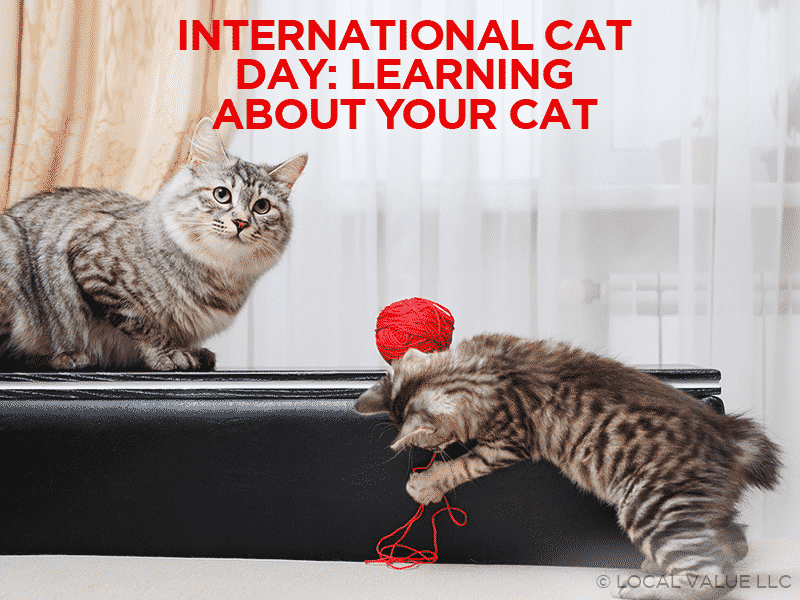
  • International Cat Day – Learning About Your Cat

    International Cat Day – Learning About Your Cat

    For International Cat Day we want to talk about learning about your cat. We all know that cats dance to the beat of their own drum. They are independent and don’t need human interaction with the exception of food and a 15 second head scratch. Anything more than 15 seconds and you’ll get bit! Kidding aside, we’re going to cover:

    • Body Language
    • Personality

    Learning these elements will strengthen the bond of your furry one so let’s get started:

    1. Learn your cat’s body language – Look at the entire cat. Although we rely on certain key body parts when assessing posture, such as ear and tail position, the posture of these specific body parts must be taken into context with the entire posture of the cat.

    Body postures can be subtle. For example, your cat may put her ears back a little, which may be hard for us to see.

    Breed variations. Manx cats have a shortened tail or are missing the tail altogether, which may make it more difficult to communicate with us.

    Body postures may change over time. Your cat may start out with fearful body postures, but as they learn that their behavior is effective, (i.e. their aggression works to drive scary people away) they may start to look more confident, even though her underlying motivation is fear.

    Most cats with behavior problems tend to be fearful and stressed rather than confident. Panting, Ears laid back, flattened against the head, refusing food, tail tucked under the body, legs tucked under the body, leaning away, crouched body are all signs of a fearful and stressed cat.

    Learn your cat’s personality  – You’ll learn a lot when you can interpret your cat’s wide vocabulary of meows. They’ll tell you when it’s time to get up (when your cat wants you too!), when they are feeling affectionate and if they’re feeling threatened or in pain.

    “Meow” is an all-purpose word. Your cat may be saying “meow” as a greeting (“what’s going on?”), a command (“Give me food, stop petting me”), an objection (“Touch me at your own risk”) or an announcement (“Here’s your mouse”). Some people have watched their cats walking around the house meowing to themselves.

    Purring is a sign of happiness (mostly). Cats purr whenever they’re happy, even while they’re eating. Sometimes, however, a cat may purr when they are anxious or sick, using a purr to comfort themselves, like a child sucking his thumb.

    Growling, hissing or spitting indicate a cat who is annoyed, frightened, angry or aggressive. Leave this cat alone.

     A howl (they sound like loud, drawn-out meows) tells you your cat is in some kind of distress—stuck in a closet, looking for you or in pain. Find your cat if they are making this noise. However, in unneutered and unspayed cats, these sounds are part of mating behavior (and very annoying). And if your cat is elderly, they may be suffering from a cognitive disorder (dementia) and may howl because he’s disoriented.

    SOURCE: PetSafe
    COPYRIGHT: Local Value


  • Heat Stroke & Your Cat

    Heat Stroke & Your Cat

    Heat Stroke and Your Cat

    We are in the height of the summer, and don’t let it slip your mind that your cats can be affected by the heat just like dogs can be. During the hottest days of the year make certain to keep your feline friend in mind and comfortable this summer. Every year, many cats are exposed to high temperatures of heat and tragically some become overheated.

    Heat stroke is a life-threatening condition where the body’s internal organs begin to shut down as a result of elevated body temperature caused by high temperatures. Here are a few ways you can help prevent this from happening to your cat.

    While cats might not take as many road trips as your dog companions do, that doesn’t mean that cats aren’t ever in the vehicle. It is common for cats to take rides in the car while going to the vet. Just like dogs, even being left in the car for a few minutes while you run in the store can be harmful to your cat and cause a heat stroke.

    A general rule of thumb is that if people are comfortable with the temperature, your animals probably are too! That being said, it is always wise to watch for signs of heat stroke, as cats don’t have a way of regulating their body temperature like humans have. They cool their body like dogs, by panting and perspiration on their footpads. However, neither method is effective in cooling them off in high heat situations.

    Even when it isn’t too hot, your cat can feel much hotter in a small space with no ventilation so it is important to keep that window open or the air on for kitty.

    Keep an eye on your cat and make sure they don’t display any of the following signs.

    • Panting
    • Red Tongue
    • Dark Red Gums
    • Pale Gums
    • Drooling
    • Weakness
    • Anxiety

    If your cat exhibits any of these signs, call us or bring your cat to the vet immediately!

    By following these tips and being aware of the temperature and your cat’s surroundings, you will ensure to keep kitty safe from heat stroke this summer. If you have any questions or concerns, you should always visit or call your veterinarian — we are your best resource to ensure the health and well-being of your pets.

    SOURCE: Pet Health Network
    COPYRIGHT: Local Value LLC