Category: Cats

  • Animal Cruelty And Violence Awareness Week

    Animal Cruelty And Violence Awareness Week

    As family and friends of our furry, finned and fine-feathered treasured companions, there is no doubt that news of animal cruelty is likely to rub us the wrong way. A majority of us cannot start to imagine someone laying a hand on our delicate and precious friends. And it is quite unfortunate that millions of pets all over the world are constantly exposed to undeserved violence, cruelty, and gross mistreatment from their masters and owners. At this juncture, if you’re wondering whether there is anything you could do to help alleviate this suffering, then you could start by showing solidarity to a movement that was started back in April 1966.

    The ASPCA ( American Society for the Prevention of Cruelty to Animals ) annually dedicates the 30 days of the month of April to raise public awareness of animal cruelty. You can also lend them a hand by supporting their cause that seeks to make the world a better place for our pets. In the next 30 days, you can assist this humane organization, and fellow animal/pet lovers mark this special month by undertaking one or more of the following responsibilities.

    1. Assisting or volunteering at the nearest local animal shelter center. This is also an opportune time of adopting a new four-legged companion.

    2. Help raise public awareness ( and funds )of the plight that unadopted animals face every day that they spend on the streets unclaimed. The few animal shelters we have are trying to rein in this situation but still require your valuable input.

    3. Spreading the message about the significance of pets in our lives through social media channels using the hashtag #fightanimalcruelty.

    Also, follow ASPCA on Instagram, Pinterest, Facebook and Twitter and encourage your online buddies to follow them too. Commit to sharing at least one of their social media posts ( on your timeline ) every day for the 30 days of April.

    SOURCE: Cat Tipper,  ASPCA
    COPYRIGHT: Local Value

  • National Pet Day is Fast-approaching

    National Pet Day is Fast-approaching

    Typically commemorated every year on April 11th, the National Pet Day was started ten years ago in 2007 by family lifestyle and celebrity pet expert, Colleen Paige. Colleen is also the creator of Dress Up Your Pet day, National Cat day and National Kids day. He started this day as a way to pay homage and commemorate the importance of pet adoption in our society. On this day, pet parents are encouraged to spare some time to celebrate their finned, furry, or fine-feathered companions and the value they bring to their lives.

    You might be wondering what’s the best way of appreciating the presence of your pet in an otherwise busy lifestyle. Well, here are some suggestions.

    1. Spend some quality time with them.

    It is actually surprising and ironical that most of us rarely make some quality time to spend with our four-pawed companions. But on 11th of April this year, set apart a few hours to walk or feed, talk or sit with your pet. You will be surprised by how much they will enjoy and savor those few precious hours.

    2. Spoil them with a rare treat.
    When was the last time you bought your fur baby a present to mark their birthday or adoption? It might be a simple toy or a few hours of clawdicure; whichever way you choose to do it, they will feel appreciated and loved.

    3. Donate to a non-profit animal welfare organization on behalf of your kitty companion.

    In honor and celebration of that relentless devotion that your furry friend has shown you, take this day to give away a few hundred dollars to the nearest adoption home or a non-profit welfare group of your choice. Remember that these are same organizations that help keep our streets and neighborhoods safe by taking in stray dogs or homeless kittens that could be potential carriers of deadly zoonotic diseases if not immunized.

    SOURCE: Cat Piper
    COPYRIGHT: Local Value

  • Love Your Pet Day

    Love Your Pet Day

    On February 20th of every year, pet lovers from all parts of the United States of America observe what has come to be known as the National Love Your Pet Day.

    This is an unofficial national holiday that is set aside for pet lovers to attend to and pamper any of their pets. If you are a pet lover as well, you’ll take the opportunity the day presents to reflect and focus on the special bond or relationship you have with your pets. More, it is a great day to take that relationship a notch higher.

    The day cannot go unnoticed especially since almost every household in the United States keeps at least one pet. The most popular kind of pets many people keep in the United States are dogs and cats- dogs slightly outnumber cats. But, don’t get it twisted: pets are not confined to feline and canine categories as there are folks who prefer to keep reptiles, fish, rats, or birds as pets instead of cats and dogs. It looks creepy to keep certain animals as pets, but if their owners are comfortable having them, then it is alright.

    On the 20th February, it won’t matter what you keep as a pet. Be it a reptile, bird, fish, rat, dog, or cat, it will be very kind of you to show love, care, and attention to your particular pet. That is not to say that you shouldn’t show your pet love, care, and attention on other days, but on the National Love Your Pet Day, you’ll take it a notch higher and solely focus on your pet, ensuring it gets a splendid time and treatment.

    How do people observe the National Love Your Pet Day?

    You might be wondering how you can observe the National Love Your Pet Day. For most people, they bring their pets a special treat, take them for a long walk, or otherwise do something good and unusual to your animal companion. Whatever you decide to do, ensure it gets fun.

    SOURCE: National Day Calendar
    COPYRIGHT: Local Value


  • Just How Safe is Your Pet?

    Just How Safe is Your Pet?

    Commemorating the Pet Theft Awareness Day

    LCA ( Last Chance for Animals ) – a non-profit welfare organization – will lead the way in marking the Pet Theft Awareness day on 14th February. And this will be in response to the burgeoning problem of pet theft that has plagued many pet owners for the last several years. So if you have a treasured furry or purring companion, this Valentine’s Day is a good time to educate yourself on the best ways of preventing the theft of your 4-legged pal. And this is quite important as statistics show that only a mere 10% of pets stolen are recovered by their previous owners. Unfortunately, the rest will suffer cruel fates in the hands of dog breeders, guinea pig labs or animal sadists.

    Safety Checks

    Having said that, you can take a step to protect your pet by marking the 14th day of this year’s February to be a day when you take the initiative to implement a few safety checks for them. For instance, you should have your pet neutered/spayed to curb their natural tendency to roam or discourage an illegal pet breeder. It also the opportune time of the year to update the current photo that you have of your pet and get them a new identification tag for their collar. And speaking of identity, you can take it a notch higher and have your barking buddy or cuddly companion microchipped. This will make it significantly easier for you to track them down should they get lost or stray unexpectedly.

    Be Part of the Network

    LCA’s News Van will be doing rounds and hosting special appearances in your nearest town. Be sure to be on the lookout for LCA’s volunteers who will be giving away vital information regarding pet theft this Valentines.

  • February is National Cat Health Month

    February is National Cat Health Month

    We all know that February is the month of love. It is that time of the year when we take the time off our busy schedules and spend some quality time with our loved ones. In similar tandem, it is only fair if you extend the same ‘agape’ love to your kitty friend. And no, you don’t have to buy them a bouquet of roses, a bottle of wine or a bar of chocolates to match. But what’s a better way of showing some warmth and love to your pet than by scheduling a visit to your the local vet in the spirit of marking the National Cat Health Month?

    What’s more, the second month of the year is also the official National Prevent a Litter Month. Under this program, local vets will be running special appointments for pet owners who need their new feline altered to help curb the growing problem of pet overpopulation. And did you also know that sterilization can also tone down your beloved pet’s urge to prowl or wander around? It has also been proven to be the panacea to several types of common feline cancers.

    And as you plan to have them altered, next month is also a good time to have their pearly whites checked. In case you didn’t know this, over 70% of purring pals develop symptoms of periodontal diseases before the age of three. And, unfortunately, most of this cases go unnoticed as pet owners rarely pay any attention to a cat’s choppers. However, this is the month to get into the habit of regularly checking your feline friend’s breath, gums, and teeth for any tell-tale signs of an anomaly.

    Lastly, in the spirit of promoting healthy living even to our feline companions, February is the best time of integrating a comprehensive weight loss program to their daily feeding log. In other words, this is the month on the calendar when we spare some time to take our pets for that annual visit to the vet that somehow always seems to escape our mind.

    COPYRIGHT: Local Value

  • 5 Important Pet Health Tips to Ring In The New Year

    5 Important Pet Health Tips to Ring In The New Year

    As a pet owner, you should ask yourself what you can do to keep your pets health in check. And what better time to do it than the New Year! Here are 5 Important Pet Health Tips you can use as a checklist to make sure your pet is happy and healthy for many, many, years to come.

    1. Schedule a yearly veterinary examination

    Annual examinations for your pet are important. You never want to wait till your pet is sick before bringing them in to us. Rather, schedule a yearly examination with us so you can be assured that your pet is healthy. An annual physical exam is a vital part of maintaining a long, healthy, and happy, life for your pet.

    1. Vaccinations

    Are your pet’s vaccines up to date? Immunizations protect our pets from harmful diseases caused by viruses and bacteria. Ask us to find which vaccines can benefit your pet based on their lifestyle and breed, and how often your pet should receive vaccines.

    1. Screening Tests

    Screening tests are very important because they detect disease before signs and symptoms even occur. We will recommend screening tests to look for problems like diabetes or thyroid disease, depending how old your pet is.

    1. Parasite protection

    Parasites are a common disease in pets. They can be internal or external, like fleas and ticks. Parasites  can also lead to heartworm and Lyme disease, to possible death which is another reason to schedule an exam each and every year.

    1. Microchips

    Does your pet have a microchip? If not, they should. While ID tags are important, you can’t guarantee that you’ll find your pet if they wander away from home. Collars and ID tags are not always the answer because they can get brittle and fall off. It’s always better to be safe than sorry.

    We all want to ensure the best for our pets. These pet health tips should ensure that your pet has a safe New Years for many years to come.

    Source: Pet Health Network
    Copyright: Local Value

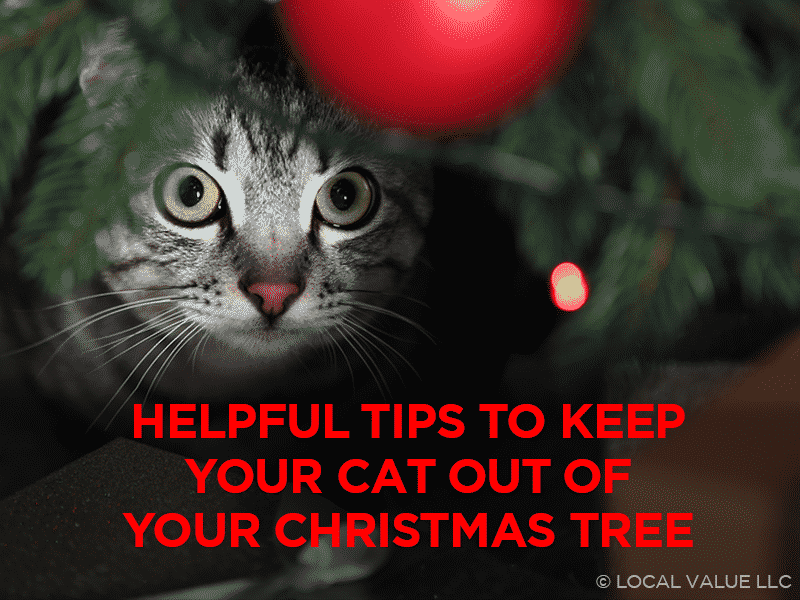
  • Helpful Tips to Keep Your Cat Out of Your Christmas Tree

    Helpful Tips to Keep Your Cat Out of Your Christmas Tree

    Are you getting ready for the hectic holiday season? We are, and if you’re like us, getting a Christmas tree is a top priority and has been a holiday tradition for ages. And if you have a cat, well, keep in mind that the tree makes a tempting target for many mischievous cats out there. Here are some tips on how to pet-proof your Christmas tree.

    To buy a real tree or not to buy a real tree

    When it comes to Christmas trees, isn’t it better to have a real tree over a fake one?  After all, they fill your house with the holiday smells of, well, holidays. However, keep in mind that if you have cats, real trees are much more tempting. Not only are real trees fragrant and the pine needles more fun to chew on (thankfully, rarely poisonous) but the tree trunk is perfect for scratching and climbing. Consider an artificial tree. If you do get a real tree, avoid one that is very tall, as a tall tree would be more likely to topple over when kitty takes a courageous hike to the top.

    Placement of the Christmas tree

    There big question. Where do you put your Christmas tree? Make sure you have plenty of space on each side of the tree so your cat doesn’t have a launching point to attack the tree! Ideally, place it in an area with an equal amount of free space as the height of the tree (i.e., if the tree is 8 feet tall, consider leaving an 8 foot berth around it).

    Securing the Christmas tree

    The base you use should be extremely sturdy. Dill into the base stump as that has proven to provide enough stability and if kitty DOES run up the tree, it decreases the chance of it toppling over.  While these bases are ugly, it beats having your tree topple. You can also wrap a dressing over the metal rods of the base so it’s not so ugly. You can also take an extra measure and drill a hook (use an anchor!) in the ceiling and attach a wire to the tree for an extra precautionary measure.

    5 Ways to Pet-Proof Your Christmas Tree

    Here are a few ways to pet-proof your Christmas tree:

    • When watering your real tree, consider wrapping the base with plastic wrap so your cat doesn’t drink the fertilizer or chemicals. (Don’t worry, these are hardly ever poisonous, however they can cause gastrointestinal upset.)
    • If you have a real Christmas tree, wrap the base of the trunk with aluminum foil. Cats can’t stand the sound and texture of foil! If you wrap the base with foil, the less likely they will claw up the tree trunk. Also, by wrapping the tree trunk with foil hopefully you will prevent the initial climb.
    • Do not hang dangling ornaments on the bottom of the tree. Rather place ornaments up high on the tree and as an extra precautionary measure, make sure they are well secured (try twisty ties or zip ties to secure ornaments).
    • Never use tinsel in a household with cats. While tinsel isn’t poisonous, when accidentally swallowed by cats, it can get stuck around the base of the tongue or in the stomach, and the result can be life-threatening.
    • Make sure you hide all electric chords for the Christmas lights as best you can. When accidentally bitten, they can result in severe burns in the mouth and even rare fluid accumulation within the lungs (e.g., noncardiogenic pulmonary edema). Hide cords, and consider spraying them with Bitter Apple to prevent chewing. Also, make sure to turn off the Christmas lights and unplug the cords when cats are unsupervised. This is especially true for kittens.

    Let’s keep our pets safe this holiday season!  Know all the precautions and keep your house safe while saving an emergency trip to your veterinarian!

    Source: Pet Health Network
    Copyright: Local Value

  • 4 Best Tips To Keep Your Pets Safe This Winter

    4 Best Tips To Keep Your Pets Safe This Winter

    When we think of winter we probably think of getting into a cold vehicle and having to wake up an hour early just to get to work in chilly winter conditions. But what about our pets? Should you limit them to being outside in the cold? Is too much cold, well, too much? Whether your pet stays inside or loves playing outside, you have to look into the risk involved with your pets and frigid temperatures.

    Keeping Your Pet Safe During the Winter Season

    1. Keep Them Warm

    Adult dog and cat body temperature range from about 100 to 102.5 degrees F. Puppies and kittens, though, have trouble maintaining body temperature. Shorthaired pets have less protection, but even wooly cats and dogs are at risk. Thinly furred areas or body parts exposed to the wind or that come in contact with the icy ground have little protection from the cold.

    2. Prevent Dry Skin

    Cold air dries skin out. So does the heat from indoor heaters. Dogs and cats often develop dry skin, dull coats, and static-filled fur during the winter as a result. What I’ve found to work are fatty acid supplements. They nourish the skin and fur, and counteract the drying effects of the blistering winter weather. You can find fatty acid supplements from pet supply stores or from your local veterinarian.

    3. Dry Them Off

    Your pets should be kept inside when temperatures drop below about 40 degrees or the weather gets really bad. Be sure to dry off your dog or cat when they come inside every time. Damp feet and fur make pets feel even colder. Moisture doesn’t evaporate well in the winter either, and can cause skin to dry and crack which can be extremely painful. Be sure to check between your pet’s paw-pads after he’s been out in the cold to ensure ice hasn’t formed into chunks in the fur. A quick dip in warm water or a foot bath with a warm, wet towel can do the trick.

    4. Check the Heat

    Cats love the heat. They may get so close to the flame they singe their fur and risk catching a fluffy tail on fire. Place a safety screen in front of your fireplace to help keep the cats a safe distance away, to prevent burns. Also, be sure to check furnaces for your own safety as well as the pets.

    Let’s keep our pets safe this winter and prevent them from getting frostbite, hypothermia or getting injured. Contact your local vet for any questions or concerns you may have.

    Source: PetSafe
    Copyright: Local Value