Tag: #cats
-

Getting Your Dog and Cat Along
Over the years the rivalry witnessed between cats and dogs has become an acceptable practice. Because of this, many pet owners prefer adopting either of the two as opposed to both of them at a go.However, with your help, this perspective can change. Therefore if you are planning to keep a cat and a dog, you have to put in a little more effort to ensure sanity in your household.We highly advise you to consider adopting kittens and puppies as opposed to grown cats and dogs if you are thinking to keep them under one roof. Since both puppies and kittens are both young and unexposed to everyday reality, it is simpler to modify their relations into getting along from a tender age.Additionally, going through different phases of life together, getting to play with each other, etc. allows time for bonding which cannot be easily erased even with external influence. However, you will have to teach your puppy how to understand when the kitten is tired as they are more energetic.Just the same way you conduct a background check on your employees, we suggest you do the same with pet adoption. Get to know more about your dog/cat’s habits, more so about the other pair. Doing this goes a long way into helping you decide which animal fits your needs. If the cat or dog you wish to adopt relates well with other animals in the shelter, there are higher chances of them getting along with the one(s) you have back at home. Most people tend to assume that most cats are friendly, we urge you not to as some cats prefer having the whole space to themselves.We understand that sometimes you might get too excited to introduce your pets to each other. But you have to slow down. Remember they speak from entirely different angles which can make getting along a bit confusing. So your enthusiasm might not really work for them. Instead, take one step at a time. For instance, you can let them watch each other from a distance for the first couple of days and then get to reduce the range with time. Remember to be present all the time at least until you are sure of them correctly getting along. -

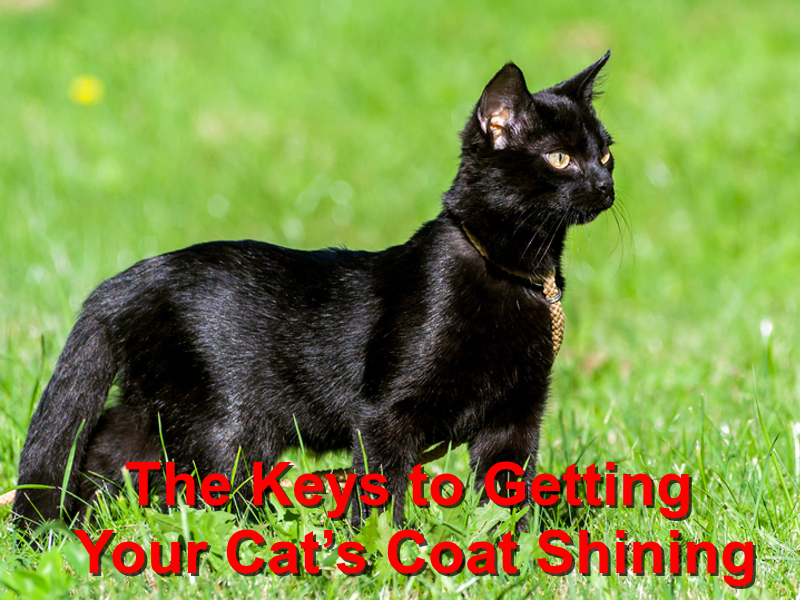
The Keys to Getting Your Cat’s Coat Shining
To get your cat’s coat to shine, you have to feed it properly, groom it thoroughly, and ensure that it’s in good health, a shiny cat is a happy and healthy cat.

Many cat owners give much attention to the appearance of their cats. As a result, people end up with cats that have dull, opaque, and unkempt coats. Collectively, we ought to take better care of our pets by ensuring that they are clean, properly fed, and in great health. A healthy cat with a shiny coat is much more fun to have around the house. Here are the steps you need to take to get your cat’s coat to shine.
Thoroughly groom your cat
You should frequently brush your cat in order to improve the shine on their coat. Cats of breeds with more fur need more frequent grooming than those of with less fur. Select grooming brushes that are gentle on the cat. Most pet stores have good quality grooming brushes in stock. Brush your cat in a gentle manner, especially when you are working on sensitive areas such as the belly. Brushing gets rid of loose hairs, and it makes the cat’s coat shiny. You can use the services of a pet groomer, or you can learn to do it yourself.
Occasionally bathe your cat
Cats are notoriously afraid of water, and they are good at self-cleaning. However, an occasional bath is important for getting your cats coat shiny. Cats that are sick and unable to groom themselves will need more frequent baths than those that are healthy. Before bathing your cat, you should ensure that they are calm, happy, or even exhausted. You should also clip their claws to ensure that they don’t scratch you. Wash your cat in a lukewarm bath in a warm room. Use a shampoo that is recommended by a veterinarian on the cat’s coat, and then rinse it off thoroughly because the cat will start licking itself afterward. Dry the cat with a towel, and keep it warm until they have completely dried off. Use a damp cloth to clean off sensitive areas such as the face and the ears.
Feed, hydrate, and deworm your cat
Cat foods that are rich in Omega fatty acids tend to improve the shine of the cat’s coat. Cats that drink plenty of water also tend to have shinier coats. A dull coat could be a sign that your cat has worms or even fleas. So to get your cat’s coat to shine, you should feed it according to your vet’s instructions, give it plenty of water, and occasionally deworm them.
SOURCES: WebMD, The Nest, WikiHow, One How To,
-

Caring for Your Senior Dog
Our pets face common problems, from fear of baths to excessive excitement when they see their humans. Now that the National Senior Pet Month is just around the corner, it’s high time to get a short refresher course on how to care for your furry friends, especially if you have senior pets. Read on to learn about two common senior pet problems—matted fur and long nails, and how to handle them.
Matted fur
Matted fur is a sign of poor health. If your dog or cat does not feel well, he tends to stop grooming. Arthritic dogs and cats take less of an interest in grooming because doing so is painful. Other factors like nausea, poor teeth and gum conditions, even stress can contribute to the lack of grooming that results to matted fur.The first step in dealing with matted fur is to determine the underlying reason why grooming suddenly stopped. If your dog or cat stopped grooming because of bleeding gums or loose teeth, immediate dental attention is required. Stress and nausea can be determined by looking at changes in eating habits, vomiting, lack of energy, and weight loss. In cases like these, bringing your pet to us is the wisest thing you can do. If your dog has been diagnosed with arthritis, you can handle the grooming routine yourself. Any unknown sources of body pain or soreness should be referred to the us.Long Nails
Almost every dog hates having their nails clipped. Reactions range from mild irritation to outright terror once they see that the nail clippers are out. Long nails are problematic especially for senior dogs because they make walking difficult, affect posture, and acerbate joint problems like arthritis.Regular walks on rough surfaces like concrete can help keep your dogs’ nails short. You can also use nail trim mats around the house. These are mats with rough surfaces that file down the nails as your dog walks on them.However, the best thing you can do is to condition your dog to not be fearful of nail clippers. The best time to do this would be when your dog is still a puppy. If this is not possible, take time to introduce the clipper to your dog. Start with acclimating your dog to the sensation of having his paws handled. Make this pleasant by pairing with a good belly rub. Gradually introduce the clipper or grinder, making sure to look out for signs of stress so you know when to stop. Follow a pace that is comfortable for your dog. You can turn the grinder on if and when the dog does not show signs of stress. Do this consistently and you will start to see improvements on how your dog responds to nail clippers and having his nails clipped or ground.Our pets face a number of health issues that are easily preventable if you know how. Keep these tips in mind so you can handle pet problems like matted fur and long nails properly.SOURCES: Pet Health Network, PetFul.comCOPYRIGHT: Local Value -

Do Cats Love Their Owners Less? Debunking the Myth
Ask anyone who owns both a feline and a canine buddy, and they will readily confess that at one point they felt that their dog loves or ‘adores’ more compared to the more docile cat. There’s no use refuting that our barking buddies can be somewhat boisterous, outgoing, animated or even exuberant. So, in direct comparison to the soft-pawed furry companions, it is easy to assume that our cats love us less than our dogs. So much that you might even be tempted to think that your cat does not enjoy your presence. But is this the truth? Well, let’s see.
Of Cats and Separation Anxiety
According to leading animal behavior researchers and analysts, cats will rarely display the same kind of behavioral attachment and separation anxiety that is synonymous to man’s most faithful buddy. There are several psychological and evolutionary reasons for this.
Solitary Hunters
Well, for starters, cats are predominantly solitary hunters. Save for the African lions; most wild cats will rarely hunt in groups, pride or packs. They will stalk, pursue, chase and pounce on their prey without necessarily relying on external aid. Dogs, on the other side of the spectrum, rely on collaborative hunting to survive. Which explains why wolves, wild dogs, foxes and the African jackal all hunt in packs and not individually. In this light of this alone, it is easy to see why your barking buddy would seem more ‘attached’ to the special bond between both of you that your feline friend. In other words, cats are naturally more or less independent of human existence.
Domesticated Earlier
Secondly, dogs were historically domesticated earlier than cats. That implies that they have been around human homesteads and our household settings longer than cats. And over the centuries, they have apparently gotten used to human mannerisms, behavior, and expectations. Think of it this way; your old high school pal would feel more attached, close, and at ease around you than a recent graduate college colleague. Right? And it doesn’t take much to see it’s because they have known you for longer, and consequently better.
In Closing
Cats, as well as dogs, do form affectionate and social bonds with their owners. It is only that cats don’t display a strong and evident social bond. But that doesn’t mean that it is not there. So, regardless of what you read online, don’t ever doubt your furry friend’s love for you!
-

Adopt A Shelter Cat Month
Just three months ago, cat lovers around the world and in the United States commemorated the ‘kitten season.’ Through our dedicated efforts, hundreds of thousands of homeless kittens were assimilated in animal shelters in different parts of the country. And this meant two things. First, your nearest local shelter is now teeming with hundreds of cute, cuddly kittens – in addition to the older, mellow adult cats. Secondly, it is time for cat lovers to add a new member to their brood. It can be to replace a lost or fallen member or simply give the older cats a younger companion to look after. For this reason, mark this year’s June as the official ‘Adopt a Shelter Cat‘ month, which is coincidentally also that time of the year when we witness a sporadic increase in feline breeding.
The bottom line here is that there is an expected influx of newborn and homeless cats as we kick off the highly anticipated summer months. And this is much as the ASPCA Adoption Center’s around the country will be working around-the-clock to find new loving homes to settle felines. As a cat lover – and above all an animal rights enthusiast – here is what you can do to help with the situation.
1. Adopt a New Cute Cuddly Kitten
We can all agree that nothing is more adorable than a few weeks old kitten. Well, and there’s no better time to get a new feline friend than during the onset of summer. This year’s kitten season also correlates with a tremendous explosion of the feline population, following the concerted efforts that animal lovers have made in the past weeks to rescue and rehabilitate homeless/lost cats. So, it is expected that the animal shelter near you has more than enough new kittens in need of a loving home. Make a difference today and adopt one and watch them grow!
2. Bring in Your Kittens for a Comprehensive Checkup
Th
is year’s kitten season is also the opportune time to visit your nearest veterinary center and have them spayed to eliminate chances of unwanted breeding in the future. What’s more, sterilizing your new feline companion lessens their predisposition to numerous cancers, especially those revolving around the reproductive system. While at it, have them vaccinated against common cat illnesses and diseases such as Chlamydaphilla Felis and rabies. A full and comprehensive dental checkup of your rapidly growing furry friend will also be appreciated in the future.Source: American Humane Society, ASPCA
COPYRIGHT: Local Value -

Useful Tips for Managing your Pets This Memorial Day
The long anticipated Memorial Day Weekend is just a few days away. Often seen by most people as the unofficial start of the fun-filled summer months after enduring the long cold wintry season, the Memorial Day Weekend is the perfect excuse for spending quality time outdoors with your loved ones. And what’s a better a way of doing that than also tagging your cherished four-legged companions along? Whether you’re barbecuing, partying or just up-and-about soaking in those glorious sun rays, your pet will also love to be there too! Nonetheless, it is still important to stay safe as much as you’re having a ball in your backyard. Here is a quick primer of a collection of useful tips that could come in handy in preventing mishaps during this year’s ‘Dog Days’ weekend.
1. Protect your Pets from Potentially Toxic Foods
Remind your guests to refrain from feeding your pets table scraps or party snacks. Chocolate, raisins, chocolate, avocado, grapes, and onions are examples of barbecue additives that are considered potentially toxic to certain breeds of dogs.2. Don’t Leave Pets Unsupervised
Pets, like toddlers, should never be left unsupervised while in the presence of potentially hazardous areas. Contrary to the common misconception, not all dogs and cats are good swimmers. Avoid leaving your pets near large pools of water/lakes/waterfalls. Speaking of which, make sure that your four-pawed companion has proper identification on them ( ID tag or an embedded microchip ) before you venture outdoors.3. Be Mindful of the Heat Levels
Pets also get dehydrated quickly especially after spending endless hours outdoors. Ensure you have enough packed clean, fresh water for them and encourage them to take intermittent breaks from direct sunlight in a cool, shaded place. To add on this, discourage nibbling around by packing a few hearty snacks for them in addition to their water ration. Party smart.SOURCES: Pet 360, Dog Time, Dog Tipper
COPYRIGHT: Local Value -

Celebrating Cat Moms This Mother’s Day!
Sunday, May 14th is this year’s Mother’s Day, and it is just around the corner. It is that time of the year when we dedicate the second Sunday of May to celebrate moms all over the globe for the heroic, selfless, and relentless role they play every day in our lives. We couldn’t be any more proud of our moms! This year, attention and recognition go to all ‘mothers’ of furbabies and cute kitties. Cats might not exactly be our ‘kids, ‘ but we still choose to recognize the invaluable role loving moms play in the nurturing of our furry companions.How Can You Contribute to this?
Are you a proud cat mom? Or do you happen to know one personally? Or maybe it’s a close relative/sibling such as an aunt, sister or girlfriend that can’t get over their furry friend. Perfect! Let’s all make this year’s Mother’s Day a special occasion for them. Spoil them with an adorable cat mom mug or that beautiful pendant with an engraved Kitty insignia. It doesn’t have to be much. Heck, it can just be a tee-shirt with a colorful scrawl of their favorite 4-legged companion. Whatever it is, just make it cute!
On a more serious note…Even as we cherish those loving moms who have chosen to accommodate a whiskered companion under their roofs, it is also the opportune time to raise awareness of the importance of observing recommended pet handling/ownership measures as directed by the Animal Humane Association. For instance, when was the last time you brought in your kitty for a thorough and comprehensive dental checkup? Is it vaccinated against common feline infections? Is it neutered or spayed to combat chances of contracting uterine or ovarian cancers? Even as we shower our proud cat moms with gifts and appreciation, this year’s Mother’s Day is also a good time to remind of the best ways of fortifying their favorite pet’s wellbeing.
SOURCES: Modern Cat, Cat Wisdom 101, ASPCA
COPYRIGHT: Local Value -

Be Kind To Animals
May 1st to 7th is this year’s Be Kind to Animal’s Week.
This is that time of the year when the American Humane Association commemorates, celebrates and encourages the virtue of being kind to animals. It is an event that has been observed since 1915, and for more than a century, the American Humane Association dedicates seven days annually in its official calendar to raise awareness about the presence of the animals in our homes. Pets are without a doubt integral members of any functional community, and AHA takes the initiative this May to recognize and honor individuals, communities, and enterprises who are in one way or another involved in the welfare of our adorable four-legged companions.
How you Can Get Involved,
in the Commemoration of this Year’s Be Kind to Animals Week
It starts with a small contribution, and it doesn’t have to be much. This year, American Humane Association has a dedicated website where one can pledge a few dollars towards this worthy movement that seeks to redefine the interaction between pets and their owners through the country. Closer home, you can also decide to adopt a pet from an animal shelter or a next-door neighbor. And if you have a pet, spare a few hours from your busy schedule to spend a few quality moments with them. You can volunteer at a nearby animal shelter if you don’t have one yet. Speaking of which, in the spirit of being kind to animals, this is also the best time of the year to neuter/spay your cherished furry or fine-feathered companion to keep disease and uncontrolled breeding at bay. Encourage your friends and family to do the same while at it. Go a step further and make a commitment to report any cases of animal abuse you might encounter to the nearest relevant authorities.SOURCE: AVMA, American Humane Association
COPYRIGHT: Local Value