Tag: #cats

  • Just How Safe is Your Pet?

    Just How Safe is Your Pet?

    Commemorating the Pet Theft Awareness Day

    LCA ( Last Chance for Animals ) – a non-profit welfare organization – will lead the way in marking the Pet Theft Awareness day on 14th February. And this will be in response to the burgeoning problem of pet theft that has plagued many pet owners for the last several years. So if you have a treasured furry or purring companion, this Valentine’s Day is a good time to educate yourself on the best ways of preventing the theft of your 4-legged pal. And this is quite important as statistics show that only a mere 10% of pets stolen are recovered by their previous owners. Unfortunately, the rest will suffer cruel fates in the hands of dog breeders, guinea pig labs or animal sadists.

    Safety Checks

    Having said that, you can take a step to protect your pet by marking the 14th day of this year’s February to be a day when you take the initiative to implement a few safety checks for them. For instance, you should have your pet neutered/spayed to curb their natural tendency to roam or discourage an illegal pet breeder. It also the opportune time of the year to update the current photo that you have of your pet and get them a new identification tag for their collar. And speaking of identity, you can take it a notch higher and have your barking buddy or cuddly companion microchipped. This will make it significantly easier for you to track them down should they get lost or stray unexpectedly.

    Be Part of the Network

    LCA’s News Van will be doing rounds and hosting special appearances in your nearest town. Be sure to be on the lookout for LCA’s volunteers who will be giving away vital information regarding pet theft this Valentines.

  • Don’t Forget To Answer Your Cat’s Questions

    Don’t Forget To Answer Your Cat’s Questions

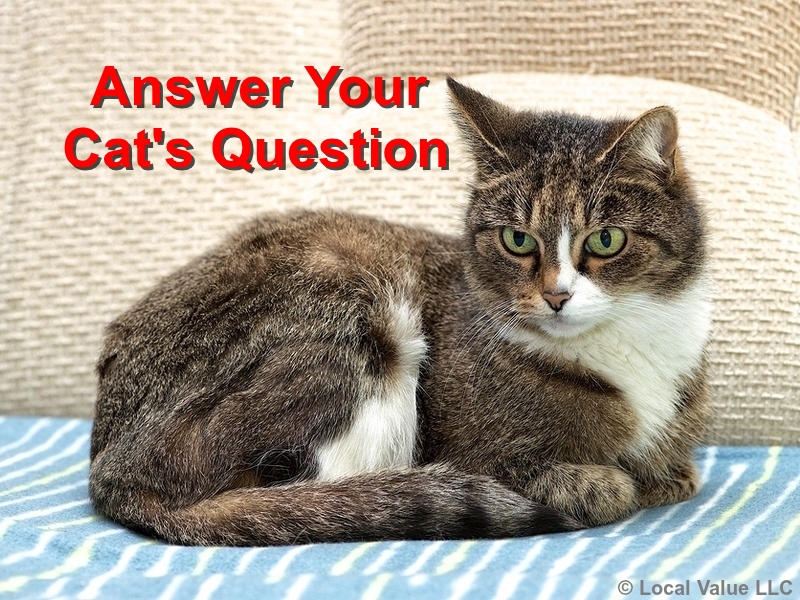
    If you’ve been looking for an opportune time to hash things out with your pet cat, then this year’s National Answer Your Cat’s Question Day on January 22nd might be just what you both need. It’s true that living with a cat comes with immense benefits. One of these merits is that you’ll always have him/her to listen to you blabber about how horrible your day was or how much your crush makes you feel tingly in your stomach or any of those deep and crazy fantasies that you keep hidden from the rest of the world. The bottom line is that your cat will always be there to listen to you without any form of judgment, but what happens when the tables turn and they are the ones that need you to listen to their questions and to answer them without being judgy?

    Seeing as these cute and cuddly pets are curious and playful in nature, keeping them in check can be quite a task. In most cases, if he/she’s not scratching your couch, they might be chewing on something that shouldn’t be chewed on or trying to get on the kitchen counter among so many other mischevious deeds. Your reaction to their mischief always leaves them with a lot of questions like;

    • what did I do wrong? I was just having fun…
    • Why is he/she angry that I peed on the carpet? I really had to go…
    • Why did he/she shout at me when I was scratching the new couch? I was just trying to see how sharp my claws are…

    Basically, it’s usually quite hard for them to understand your resulting behavior and that’s why taking some time to answer some of these questions could greatly help your cat to improve its overall behavior. They say, “Curiosity killed the cat!” And no matter what you say or do, they will always be curious and attentive to detail. So, before you bring something new to the house, or react oddly to their actions or even yell at them, just know that you will be held accountable for your actions during this year’s National Answer Your Cat’s Question Day.

    SOURCES: Catster, Punchbowl
    COPYRIGHT: Local Value


  • June Is Adopt a Shelter Cat Month

    June Is Adopt a Shelter Cat Month

    June: Adopt a Shelter Cat Month

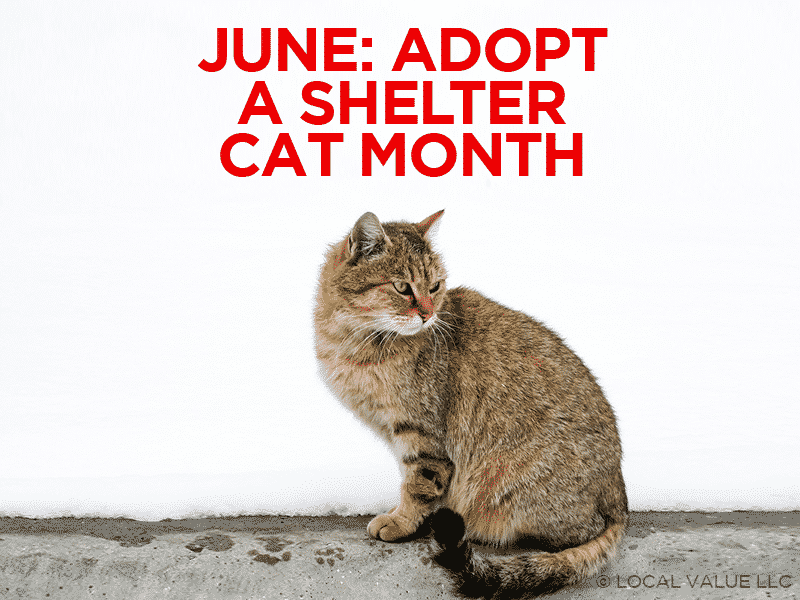
    A new year brings a new season. In this case, this season happens to be “kitten season”. Kitten season starts in the spring, peaks in the late spring or early summer, and ends in the fall. Now would be the perfect time to adopt a furry feline! After all, the American Humane Association estimates that four million cats and kittens end up in the shelters every year.

    What to consider before adopting:

    1. Consider your lifestyle before selecting your cat or kitten – Can you afford the cat or kitten? You will also need to buy food and litter monthly. To keep your cat or kitten healthy, annual veterinary exams are strongly advised. It’s important to consider this and I would recommend talking this over with your local vet.
    2. Do You Work Long Hours? – Adult cats are often more than happy to nap the day away alone while you’re at work. Kittens, however, require your attention to raise and keep them out of trouble.
    3. Do you really want a long haired cat? – Cats & kittens with long hair will require regular grooming to prevent mats.
    4. Are there young children living in your household? – Very young children may not realize how delicate kittens are. Always watch after your children around with pets. Cats that are at least one year old may be a better fit for homes with young children. Always ask about the temperament of a cat and let the shelter know if you have children in your household.
    5. Have you considered if a kitten is right for every member of your family? Kittens don’t always mix with children or seniors. For the child’s well-being and the cat’s, we generally do not recommend a kitten for families with children under the age of six. Kittens with sharp teeth and claws may inadvertently injure a small child. Their claws can also pierce the delicate skin of an older person and cause infection.

    Just remember, cat’s are amazing animals that will shower you with love and affection. Give an adult cat a second chance at life and you will win their heart.

    SOURCE: Petful
    COPYRIGHT: Local Value

  • Cats, Cars and Safety in Cold Weather

    Cats, Cars and Safety in Cold Weather

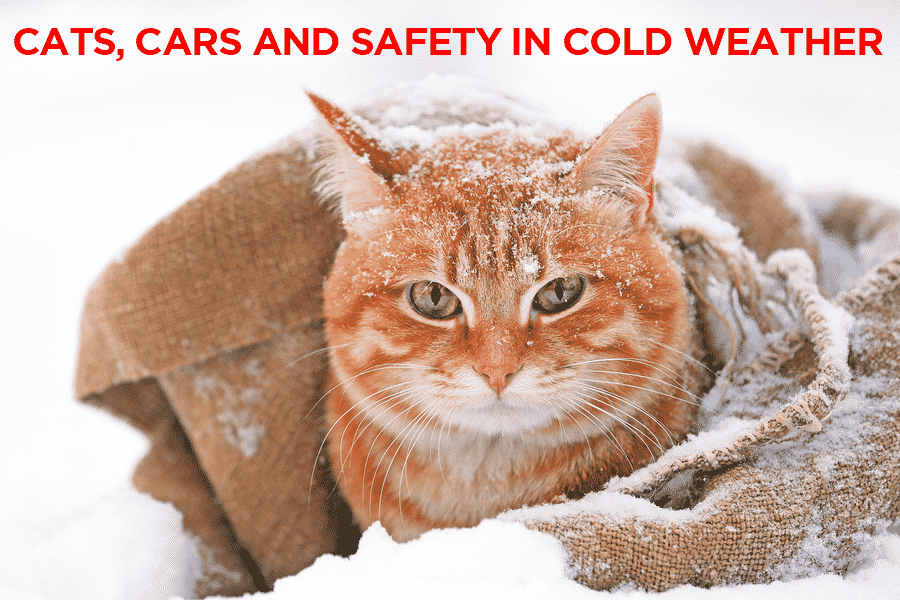
    Cats seek warmth wherever they can, especially during the cold winter months. One particularly irresistible place for our furry friends is the cozy confines of a warm car engine. Unfortunately,that might not be the most ideal place for them when the car is started, causing injury or death. Help keep our feline friends safe this winter with these great tips.

    Cats – Keep Them Inside

    The best advice regarding your own cat is simply to keep him indoors during the winter. You’ll protect him not only from engine dangers but also from becoming lost, stolen, or injured.

    Check on Them Before Leaving For A Trip

    With your cat safe inside, it should be easy for you to check on her before leaving on any trips.

    Give Them a Warning

    Even with your cat safely inside, neighborhood and feral felines could still be hiding under your car. You can honk your horn before starting your car to help wake up any sleeping cats under or in your engine and give them a chance to escape before starting the car.

    Source: Pet Health Network 

  • Senior Pets

    Senior Pets

    Did you know that cats and dogs are usually considered “senior” at 7 years of age? Larger breeds of dogs are even considered senior at 5 years old. That being said, it is important to remember that not only is your pet’s coat color getting greyer, but also your pet’s organ systems are changing as they age. Below are some things that you need to be on the look out for:

    • An older pet is more likely to develop diseases such as heart, liver and kidney disease, cancer or arthritis. Cancer accounts for about half of the deaths of pets over the age of 10.
    • It is normal for pets to lose some of their sight and hearing as they age, just like humans. If your pet’s eyesight is failing, avoid rearranging or adding furniture or other items that could become obstacles.
    • If your pet is starting to avoid jumping, active playing or even daily activities such as jumping into your car, it may have arthritis.
    • Behavioral changes in your pet can serve as the first indicators of againg or of a problem. Changes might be due to pain, or worsening signt or hearing or even due to its normal aging process.
    • Weight can have an enormous effect on an older pet’s health. Excess weight in older pet increases the risk of arthritis, difficulty breathing, diabetes, high blood pressure, skin problems, cancer and other conditions.

    Because older pets are more likely to develop certain conditions, it is very important that they are regularly examined by a veterinarian to maintain them healthy. For more senior pet’s information go to the American Veterinarian Medical Association Senior Pets webpage.

  • Funny Cats Compilation Video

    Cats are brave, independent, loving, friendly and even funny. Watch this video to laugh a bit and fall even more in love with your cats (or to convince yourself to adopt one if you haven’t done so yet!).