Category: Social Media

  • Veterans Day And Pets

    Veterans Day And Pets

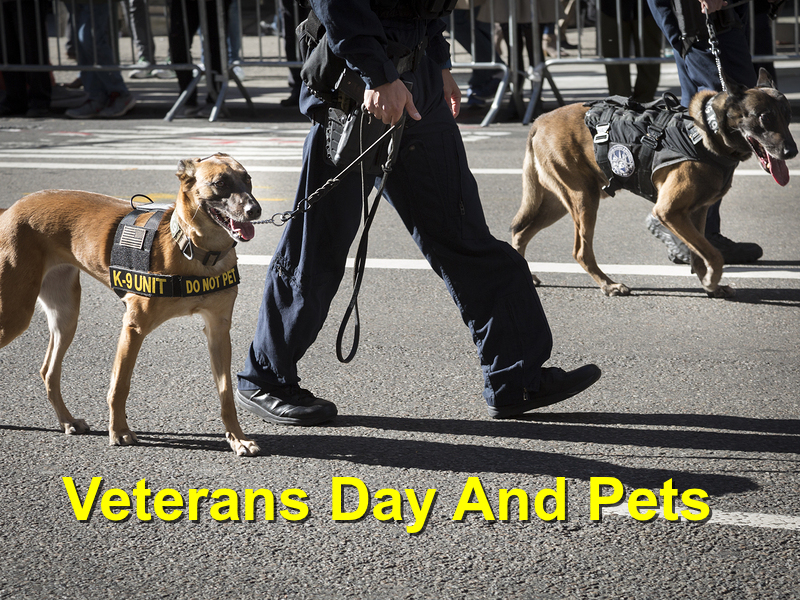
    Each veteran Day we recall the men and ladies who served our nation – but shouldn’t something be said about our canine veterans? Administration dogs are a necessary part of the U.S. military, doing everything from sniffing out bombs to helping veterans with the post-traumatic stress disorder (PTSD).  We need to thank every one of our veterans for their support of our nation, regardless of whether on two legs or four.

    Dogs in the U.S. Military

    The United States military has utilized dogs the vast majority of its significant wars, including World War II, the Vietnam War, and the wars in Iraq and Afghanistan. Throughout the years, dogs have been detachments, unit mascots, and trackers of aggressors. All the more as of late, medication and bomb-sniffing canines have been a crucial piece of the military, alongside military police dogs.

    Treatment Dogs

    Late research has demonstrated that petting and playing with creatures can enormously lessen stress and sorrow. Veterans with the post-awful anxiety issue, or PTSD, are regularly combined with an administration dogs or treatment dogs. Troopers returning home from a tour can discover returning to regular citizen life difficult; having a furry close companion can make progress somewhat less demanding.

    Help a Veteran in Need

    Finding a canine sidekick for each veteran requires many resources. Giving, raising money, and supporting foundations that place pets with vets have not fulfilled the desired intention. Trooper’s Best Friend, Pets for Vets, Patriot Paws, Veterans Moving Forward, and Hero Dogs are part of the numerous philanthropies that give treatment and administration dogs to veterans.

    This Veterans Day, recollect each one of the veterans who has served our nation, regardless of whether on four legs or two.

    Pets enormously affect veterans when they return home, but can likewise be an imperative piece of an officer’s day. One courageous dog named Layka was working with Special Forces in Afghanistan and was dispatched to scan an operation for explosives. At the same time, she was trapped and shot numerous times by an assailant. In spite of her wounds, she could ensure her pack by attacking her enemy. Layka was granted an informal award to be recognized for her sacrifices. She is currently resting comfortably with her handler.

    SOURCES: Pets For Patriots


  • Caring for Your Senior Dog

    Caring for Your Senior Dog

    Our pets face common problems, from fear of baths to excessive excitement when they see their humans. Now that the National Senior Pet Month is just around the corner, it’s high time to get a short refresher course on how to care for your furry friends, especially if you have senior pets. Read on to learn about two common senior pet problems—matted fur and long nails, and how to handle them.

    Matted fur

    Matted fur is a sign of poor health. If your dog or cat does not feel well, he tends to stop grooming. Arthritic dogs and cats take less of an interest in grooming because doing so is painful. Other factors like nausea, poor teeth and gum conditions, even stress can contribute to the lack of grooming that results to matted fur.
     
    The first step in dealing with matted fur is to determine the underlying reason why grooming suddenly stopped. If your dog or cat stopped grooming because of bleeding gums or loose teeth, immediate dental attention is required. Stress and nausea can be determined by looking at changes in eating habits, vomiting, lack of energy, and weight loss. In cases like these, bringing your pet to us is the wisest thing you can do. If your dog has been diagnosed with arthritis, you can handle the grooming routine yourself. Any unknown sources of body pain or soreness should be referred to the us.

    Long Nails

    Almost every dog hates having their nails clipped. Reactions range from mild irritation to outright terror once they see that the nail clippers are out. Long nails are problematic especially for senior dogs because they make walking difficult, affect posture, and acerbate joint problems like arthritis.
     
    Regular walks on rough surfaces like concrete can help keep your dogs’ nails short. You can also use nail trim mats around the house. These are mats with rough surfaces that file down the nails as your dog walks on them.
     
    However, the best thing you can do is to condition your dog to not be fearful of nail clippers. The best time to do this would be when your dog is still a puppy. If this is not possible, take time to introduce the clipper to your dog. Start with acclimating your dog to the sensation of having his paws handled. Make this pleasant by pairing with a good belly rub. Gradually introduce the clipper or grinder, making sure to look out for signs of stress so you know when to stop. Follow a pace that is comfortable for your dog. You can turn the grinder on if and when the dog does not show signs of stress. Do this consistently and you will start to see improvements on how your dog responds to nail clippers and having his nails clipped or ground.
     
    Our pets face a number of health issues that are easily preventable if you know how. Keep these tips in mind so you can handle pet problems like matted fur and long nails properly.
     
    COPYRIGHT: Local Value
     
     
  • National Cat Day

    National Cat Day

    National Cat Day was introduced and first celebrated back in 2005 as a unified way of raising awareness to the rising number of destitute and homeless cats both in animal shelters and stranded on the streets. This year, the feline’s big day will be held on October 29th, 2017, as it has typically every year since 2005. Here’s how you can make a difference in this year’s National Cat Day. 

    1. Adopt a Kitten or an Adult Cat from your Nearest Local Cat Rescue Center or Shelter

    Do you love cats but wondering where you can get your hands on a cute one? Well, your nearest cat rescue center ought to be your first port of call. There currently hundreds of thousands of homeless cats across the United States. It might not seem as much, but adopting a cat on this day will mean one less homeless kitty in the country. This adoption can also be complemented by volunteering at your nearest cat rescue, donating several tins of pet food, cat toys, and blankets. 

    Do you love cats but wondering where you can get your hands on a cute one? Well, your nearest cat rescue center ought to be your first port of call. There currently hundreds of thousands of homeless cats across the United States. It might not seem as much, but adopting a cat on this day will mean one less homeless kitty in the country. This adoption can also be complemented by volunteering at your nearest cat rescue, donating several tins of pet food, cat toys, and blankets. 2. Take your Feline Friend to the Vet for his Annual

    2. Take your Feline Friend to the Vet for their Annual Checkup 

    Yes, we know that the year is almost coming to an end. But even then, there are some among us who have been so busy throughout the past nine months to pop into your favorite veterinary (us of course) with your furry pal for a lengthy checkup session. This is the perfect time of the year, particularly now that the year is almost winding down. And while at it, make a note of scheduling vaccinations and dental checkups after every three months in the coming year 2018. 

    3. Treat your Cat to Something Special

     When was the last time you took your cat out for a drive or a walk? This is the perfect day to do so, considering that there will be hundreds of cat funfairs in town! If that’s not possible, then try to buy them a new cat toy, their favorite pet food and spend an extra hour or two ( than what you’ll usually spend ) grooming, cuddling, and cleaning their litter box. Ensure that you also get them a new and fully labeled collar for his big day. Besides, you can also go a step further a hire and hire a professional animal photographer to take stunning photos of your feline buddy. 

    ASPCA 

    National Cat Day is supported by several entities such as the ASPCA ( American Society for the Prevention of Animal Cruelty ) and is a complementary celebration of the International Cat Day which is held August 8th every year.

    SOURCE: ASPCA, National Cat Day
    COPYRIGHT: Local Value

  • Build Boundaries for your Dog

    Build Boundaries for your Dog

    It is vital to give your canine friend rules, limitations, and exceptions. Your dog ought to know what they can or cannot do, and where not to do it and, for how long, if they have to do it. Here’s a quick primer on how to socialize your dog by imparting the sense of boundaries in them. 

    1. Claim your Space and Don’t Relent or Back Down on it 

    Your barking buddy is a territorial animal, regardless of what you would like to believe or how domesticated you think they are. And you’ve ever observed dogs interacting; then you must have noticed their tendency to claim their space. They will often do this either physically or through their body language or primal energy just to lay out the message that a certain space belongs to them, even without barking, gnarling or ‘showing their teeth.’ The same way your pawed friend might claim a food bowl or dog toy by only standing over it, you should control access to certain aspects of your home by authoritatively denying them entry. 

    2. Learn to take the Lead 

    One of the best ways to assert your authority is to form a habit of taking the lead, at all time. Not only does this emphasize that you’re the leader but it also trains your barking friend to learn the virtue of learning how to stop and wait for your instructions, at every threshold. This way, you can have some degree of authority over the animal, and he will always look up to you for guidance and direction. One of the best ways of doing this by taking your dog for regular walks and insisting that you walk behind you all the way through. 

    3. Correct Misdemeanors Promptly, Swiftly and in Time

    If you’re trying to teach your dog how to stay away from your furniture, then the best time to prohibitive the displeasing behavior is when he just about to jump on the sofa and not when he is already on it. In other words, he will be able to connect the improper behavior with your corrective action. And with time, this will be firmly established in his mind. The key to creating a concise and an almost palpable boundary to timing your correction with when he is just about to commit an error. 

    Go beyond

    Once you have succeeded in teaching your dog what isn’t allowed and what is allowed, don’t stop there yet. Go a step further and be consistent with a few things: For starters, maintaining these preset boundaries. Secondly, the exceptions to the rule to trespassing your boundaries.

    SOURCE: Cesars Way
    COPYRIGHT: Local Value

  • Veterinary Technician Week

    Veterinary Technician Week

    National Veterinary Technician Week is a time set aside to appreciate the health care experts that ensure pets perform their day to day tasks with ease. Vet technicians help preserve your animal’s welfare by improving their health. This commemoration was started back in 1993 and recurs every year in October’s third week. The same is expected this year too.

    It is regarded the best time to appreciate veterinarians all across the country.

    How can I help?

    There are various ways which can be used to raise awareness for the National Veterinary Technician Week cause and promote our course. A media kit is one of them, and it helps us tutor the community about what we do and veterinary services. The kit also helps reinforce our professionalism and value to motivate people who intend to become vets one day.

    A media kit also provides opportunities for us, as veterinary technicians, to commend each other for team building and superb work ethic. Also, we get to acknowledge breakthroughs by other veterinaries while building a quality relationship with the public. You can download the veterinary technician kit for more information about our appreciation week.

    The package contains but is not limited to sample public service announcements, press releases, organizing yourself for the national veterinary week, and event ideas for the week. Veterinaries may be valued every day of the year but this week is set aside to show us gratitude for our compassionate commitment towards your pets.

    When does it Start and Future Dates?

    This year’s National Veterinary Technician Week begins on October 13th and ends on the 19th of the same month. The next National Veterinary Technician Week will commence on 14th October 2018 and run up to October 20th in the same year. The 2019 National Veterinary Technician Week will take place on 13th October 2019 and end on 19th October the same year.

    AVMA

    Our veterinary technician brochure contains all the information required to help you achieve your dream of becoming a veterinary technician. You can also visit this page from the AVMA to get more information about veterinary technicians and their assistants. You can also help us raise awareness by downloading the national veterinary technician week photo and using it as your social media cover photo on sites such as Facebook and Twitter.

    Lastly, for more information about this course visit the National Association of Veterinary Technicians in America. Help us take better care of your furry, feline, and avian buddies.

    SOURCES: AVMA, NAVTA
    COPYRIGHT: Local Value

  • Columbus Day And Your Pet

    Columbus Day And Your Pet

    The day that commemorates the arrival of Christopher Columbus in the New World is approaching fast and what’s a better way to celebrate it than a well-deserved outdoor stint with your pet. It is also the perfect time to get in touch with nature, and it offers a lot of fun for you and your little helper. Here are some fantastic getaways you can enjoy on that day.

    Sample some of the Best Pet-friendly Getaways. These include some like:

    • San Francisco, California

    Get pet-friendly safari tents near San Francisco and enjoy the area that is famed for welcoming the first travelers to America. You are sure to spot a wild animal or two behind the ancient trees, and your pet will get plenty of room to play far away from the city noise. The perfect way to spend the night is beside a fire with your pet as waves crashing on the Californian coast echo from a distance.

    • Luxury cabin in Albany

    Upstate New York has a lot to offer for you and your pet particularly a pet-friendly luxury cabin located near Albany. It can host up to four people so you can bring more than your pet and offers the perfect getaway from the city noise and rush. As one of the first settled places in the country, this area is a great place to spend Columbus Day.

    • Dog-friendly cabin near North Carolina

    You can fully embed yourself into nature in the glamping cabin located in the mountains near Asheville, North Carolina. The cabin is not only eco-friendly but also dog-friendly and seeing its location is in the foothills of mountains, you can expect a lot of nature and tranquility.

    The cabin has a unique style and is designed to ensure you leave little to no footprints making it an ideal Columbus Day getaway. Mix the cabin’s design with surrounding nature and you both comfort and bliss in one package.

    Other Options

    Other than the places mentioned above, you can also spend the holiday on the beautiful waterways and lush woodlands at the Hyatt Lake cabin in Oregon. Alternatively, a chance to sail, just like Columbus did, to the houseboat rental located on a private island in the Florida Keys would provide a thrilling experience for you and your pet. Whatever your choice, make sure you involve nature in it to relieve the day Columbus discovered this beautiful country.

    SOURCE: Glamping Hub
    COPYRIGHT: Local Value

  • Dog Tick Tips that a Dog Owner Should Know About

    Dog Tick Tips that a Dog Owner Should Know About

    Dog ticks are without a doubt quite annoying and irritating creatures. But their irritation is not just pegged on their constant irritation to bite and suck blood from their hosts, but also by the ability to spread tick-borne disease. 

    Here’s how to minimize the tick nuisance and save your canine friend a lot agony in the coming months. 

    1. Learn a Horde of Tick Prevention Strategies 

    Prevention is better than cure. If you can keep the ticks away from his kernel or your household, you wouldn’t have to worry about the best elimination strategy afterward. Ticks have a liking for areas studded with dense vegetation. They usually thrive best around bushy, overly grassy and unkempt compounds. And since they spend over 90% of their lifetime in the ground, they are quite adept at climbing tips of vegetation and attaching themselves to the nearest unlucky host. So, avoid as much as possible exposing your barking buddy to shrubby and bushy places, especially during the so-called peak tick season. 

    2. Vaccinate your Pet 

    A majority of pet owners don’t know that there exists a Lyme disease vaccine that has actually been around for several months now. Lyme is one of the common dog diseases that are spread by ticks. In fact, most veterinarians ( like myself ) would recommend vaccinating your pet at least once a year if you reside in an area prone to Lyme disease infection. 

    3. Frisk and Inspect your Pet on a Daily Basis 

    Get into the habit of performing a daily or twice-a-day regular ‘tick check’ on your trusted friend, especially if he’s been outside your compound for a while. Getting rid of these parasites before they engorge and embed themselves inside the animal is easier and hampers their chances of spreading infectious diseases. Some of the parts that ticks love on a dog include his neck, under the ears, at the base of the neck and the area around his tail. Pay a lot of attention to these areas while frisking him. 

    4. Learn how to Remove Embed and Engorge Ticks Property and Promptly

    There is no point frisking your canine buddy if you don’t know how to purge these annoying parasites from his body, right? For starters, wear a good pair of clinical gloves before attempting to remove the ticks, use a pair of forceps ( and not a pin) to pry the tick away from the body of the animal. There also a number of good tick extractors on the market that are designed to remove ticks that have been attached to a pet’s body for longer. 

    SOURCES: Vet Street, Pet MD, Huffington Post
    COPYRIGHT: Local Value

  • Do Dogs Dream? A Comprehensive Analysis

    Do Dogs Dream? A Comprehensive Analysis

    Leading researchers and animal behaviorists believe that dogs indeed dream, just like we do. If anything, there’s no doubt that you may have noticed your dog quivering, twitching, growling or even snap while fast asleep. Let’s look into this, shall we?

    Shedding Some Crucial Light at the Dogs Brain

    At the most basic level, a dog’s brain is almost similar to that of a man ( and by man I mean human beings ). Therefore, during sleep, the brainwave patterns of your canine friend are almost similar to a man’s and technically, elicit the same neurological stages of electrical activity that is observed in most people. This makes the theory that dogs dream while asleep very feasible from both a physiological and psychological standpoint.

    There’s Proof that Less Intelligent and Mentally Developed Animals also Dream

    Recent evidence points towards the possibility that animals such as rats ( which are evolutionary less developed, complex and intelligent than dogs ) also dream. A scientific observation suggests that the brains of these rodents function in a manner that suggests beyond reasonable doubt that they dream while asleep. Now, since a dog’s brain is more complex ( and has more electrical neurons ) than a rat’s it is possible that based on this fact alone, that dogs also dream while asleep. Besides, remember that we mostly dream or fantasize about the things we do during the day. Similarly, dogs will relive their memories or activities that they may have encountered during the day in their dreamy expeditions. No wonder a dog will whimper or bark in their sleep.

    How Often Does my Dog Dream at Night or while Asleep?

    Now that we’ve singled out that your barking buddy will once-in-a-while get lost in limbo while in a dream, the next question by most pet owners is, how often or for how does he dream? Well, two factors here: When it comes to dreams and dogs, the rule appears to be the bigger the dog, the less they dream. Smaller dogs such as the Chihuahuas will dream for longer and more frequent per sleeping session than larger dogs such as bulldogs and terriers. Further research into this will reveal that seniours and puppies tend to dream more than middle-aged canines.

    Let the Sleeping Dogs Lie

    It is important not to distract your dog or attempt to wake him up when you see him whimpering or barking in his sleep. During this time, he is most likely in his REM stage, and any sudden movement can be startling, to say the least.

    SOURCES: Psychology Today, Live Science, AKC
    COPYRIGHT: Local Value