Category: Dogs

  • Take Your Dog To Work Day  Tips

    Take Your Dog To Work Day Tips

    Work Day Tips

    June 24th is national Take Your Dog To Work Day. If you didn’t get the memo then you will be surprised if you see some furry ones passing by your office or cubicle.

    A 2006 survey by the American Pet Products Association (APPA) found that 1 in 5 companies allow pets in the workplace. Participants said pets make for a creative work environment, improve employee attendance and productivity, and help employees better relate to each other according to Petsafe. “Having a dog, or any pet around has a soothing and mood-lifting effect on people.”

    Here are some tips to make Take Your Dog To Work Day:

    1. Be Prepared – Don’t forget food and water for your dog. Leashes, collars, and poop bags would be a great help as well.
    2. Respect Others – Not everyone might be comfortable around a dog so respect them. Keep your dog around your office or cubicle and let others come and pet your dog.
    3. Cope with their anxiety – Maybe your dog might be anxious and they might not take to being in an office. If this is the case then make them feel comfortable as possible. They might not think Taking Your Dog To Work Day is cute. If you know your dog has high anxiety around other dogs or people then taking your dog isn’t a great idea. Know from the start to prevent anything bad from happening.
    4. Properly discard of lunches – Many dogs love snooping for food in garbage cans or anywhere else they can find it. Assume Fido will consider the wastebaskets under desks at the office or the trash receptacle in the break room as good places to grab a snack — especially after lunch.
    5. Make sure your pet plays well with others – It is likely that you won’t be the only one at your job bringing a pet to work. Some dogs would do fine if they were the only canine in the office. Add a few more, and perhaps some cats, and circumstances could change dramatically. Have an accurate sense of what the workplace atmosphere will be, and determine whether it is a good fit for your pet.

    SOURCE: PetSafe
    COPYRIGHT: Local Value

  • Celebrate the Dog Dad in Your Life this Father’s Day

    Celebrate the Dog Dad in Your Life this Father’s Day

    Father’s Day

    When it comes to Father’s Day, dads have long gotten the short end of the gift stick with the usual boring ties, tools, and T-shirts.

    But when you add pets to the equation, these same old dad gifts become a lot more memorable.

    Active & Outdoors

    Does dad like to go for runs with his dog, walks in the park or try to stay active? Help him track his steps with this paw print pedometer. If jogging is his thing, these running shorts feature paw prints and are not expensive at all. You can alway get the furry one a Chuck It and add to the outdoor fun. You can end up running just as much as your dog trying to keep the Chuck It away from him.

    For less strenuous outdoor activity or for smaller dogs unable to run or walk long distances, consider getting a pet trailer that tags along behind a bicycle or pushed like a stroller. This allows different or smaller pets to spend more outdoor time with dad without the hazards (and make sure to bring extra water in hot temperatures).

    Charitable Gifts

    Make a donation to dad’s favorite animal charity or your local shelter in his name. Shop for gifts from websites that donate to animal charities and causes. If money is a concern, consider taking dad to the animal shelter and volunteering with him for the day. It helps the animal shelter, it’s free and you will feel good afterward. Call the shelter in advance to check on days and times that would be best to visit. You can also round up extra blankets, sheets, pillows and pet items and do a shelter drive-by.

    Memorial Gifts

    If your dad is an animal lover and recently lost a pet, this can be a difficult time. Sometimes the best gift you can give to someone who has lost a pet is your time, patience, understanding and willingness to listen. Another memorable gift people love are pet DNA tests. Those usually run no more than $100 and are usually very accurate.

    SOURCE: Petful
    COPYRIGHT: Local Value

  • How Many Miles Can You Run With Your Dog?

    How Many Miles Can You Run With Your Dog?

    How many miles can I run with my dog?

    Although all people can run a marathon, regardless of their height, shape or body build, it’s not the same with dogs. It’s very important for dog owners to determine whether your breed is meant to run- Let’s figure out how!

    It’s a fact that some dog breeds are just not meant to run. These include Boston Terriers, Pugs, Pekingese dogs, French Bulldogs and English Bulldogs. Moreover, big dogs like Doggie de Bordeaux, Mastiff or Newfoundland, which are the lazy, 100 lb. dogs, difficult for you to even lift into your car, should not be made to run for more than a mile.

    Next thing to consider is the burliness of your dog. If your dog has a muscular build, he probably prefers to sprint. But, keep in mind, such muscular dogs ( like Boxers, Greyhounds, Pit-bulls) can overheat easily! If your dog has shorter legs in comparison to his body, he’s probably not the runner-type.

    Finally, if your dog has a smooshed face with tiny nostrils that make it pant even at rest, or snore louder than your husband, he’s probably going to be okay running or jogging short distances only. It is important to consult with your vet and take it extremely slow while acclimatizing your dog to such (agonizing!) hobbies.

    Look for a dog that is healthy, excitable and enjoys running and playing. Typically, Labrador Retrievers love to run and play, making good running partners, as do Golden Retrievers, German Shorthaired Pointers, Border Collies, Mutts, Schnauzers and the little Shih-Tzus.

    Don’t expect your dog to cover 5 miles on day one, 12 miles on day two- take it slow, one step at a time. If your dog is dragging behind, huffing and puffing with that exhausted face (even on a cool day!), take it easy! It is not worth training for your marathon, at the cost of your mutt’s health and well being!

    Source:  Pet Health Network
    Copyright: Local Value LLC

  • Heartworm and Your Dog. What You Need To Know.

    Heartworm and Your Dog. What You Need To Know.

    Heartworm and Your Dog. What You Need To Know.

    Despite major awareness on heartworm infections, thousands of dogs continue being infected each year. However, these heartworm infections would have been prevented if people had some knowledge about these heartworms.

    Habitat – Heartworms first entered the country along the Gulf of Mexico but now all the 50 states have cases of infections. These results when people move from place to place with their dogs which may be carrying the infections.

    Dog tests – Since any dog can be infected, it is advisable to always take your dog for annual tests. To add on that, they should be given monthly preventives which are very effective and affordable.

    Heartworm reservoirs – The major reservoir host for heartworms are coyotes and also stray dogs. It is, therefore, necessary to do away with coyotes and stray dogs where you live.

    Mode of transmission – Mosquitoes are known to transmit a lot of diseases, one of them being heartworms. Since they are all year round insects that have the capability to multiply faster, measures to control them should be taken immediately and always.

    Climate – Due to the changes in environment and climate, the initial triggers have been becoming less effective in fighting heartworms keeping in mind that mosquitoes are an all year round insects. Therefore, preventive measures should always be taken throughout the year.

    Body size – The heartworms larvae are microscopic but once they get into your dog’s lungs, they can grow up to over a foot long. This causes severe devastation to an infected dog as the heartworms start to multiply.

    Treatment – Though an infection is hard to cure, the treatment involves injection of certain chemicals and partly antibiotics which require weeks or even months of exercise restriction to your dogs.

    Preventive measures – All the preventives belong to the Macrocyclic lactones group of drugs and are all similar in action. They act by preventing maturation of the immature heartworms. They should be administered once per month throughout the year.

    Additional preventive measures – Since mosquitoes are a mode of transmission, measures to eliminate them should be put in place such as clearing stagnant water around our neighborhood.

    Source: Pet Health Network
    Copyright: Local Value LLC

  • Irish Breeds to Bring You Luck This St.Patrick’s Day

    Irish Breeds to Bring You Luck This St.Patrick’s Day

    Irish Breeds to Bring You Luck This St.Patrick’s Day

    St. Patrick’s Day is here and everyone is looking for their lucky leprechaun on the other side of the rainbow with a pot of gold. Since that probably won’t happen, We have rounded up 5 of the cutest Irish dog breeds In honor St. Patrick’s Day!

    1. The Irish Terrier

    Irish Terrier’s are definitely cuter than a leprechaun and they are super smart too! Did you know that this breed used to work as messengers and lookouts World War I? Click here to learn more about the Irish Terrier!

    1. The Irish Setter

    While Irish setters are now famous for their vibrant red coats, that hasn’t always the case. As hunter dogs their owners preferred them to be red and white, so they could see them easily in the field. Soon the breed began to appear in dog shows more than hunting in the field and people went crazy over their red coats. To learn more about the Irish Setter, click here!

    1. The Irish Red and White Setter

    This breed almost faced the brink of extinction when popularity of their all red counterparts above was at an all time hight. Fortunately they were able to be revived in the 1920s and are still around to this day! To learn more about the Irish Red and White Setter, click here!

    1. The Irish Wolfhound

    Irish Wolfhound’s have ties all the way back to 391 A.D. originally being used in war to drag men off of their horses and hunt large game. Times have changed as today the dog is a great family companion competing in tracking and obedience. To learn more about the Irish Wolfhound, click here!

    1. The Irish Water Spaniel

    This is a very special breed of dog to many. Why? because it barely sheds! Among other reasons, the Irish Water Spaniel This breed is one of the oldest and most rare breeds of the spaniel. With its curly coat and fun loving attitude this dog will sure to bring luck to anyone that needs it any time of the year, Not just St. Patrick’s Day.  To learn more about the Irish Water Spaniel, click here!

    Source: Pet Health Network


    Copyright: Local Value LLC

  • Reading Your Dog’s Body Language

    Reading Your Dog’s Body Language

    Reading Your Dog’s Body Language

    Since dogs can’t talk to us, they have to rely on other ways to communicate with us such as vocalizations,, body gestures and postures. They have to rely on these communication to let other dogs and people know how they are feeling, especially if they feel stressed, frightened or threatened. They hope by communicating this way it will diffuse the situation and at the very least, they hope they won’t get in trouble.

    Since we can’t always read our animals body language accurately, we must learn to read each animal individually. Dogs are  just like people in the regards that they have their own individual personalities and  they don’t express themselves in the same manner. While one dog wagging its tail might be happy to see you, another dog wagging its tail might mean that it is anxious or nervous.

    If a dog is getting increasingly concerned about the situation it finds itself in, its behaviour will begin to change. As the dog gets more concerned about the situation it’s in, its behavior will change. When a dog tucks its tail under its belly, it might be frightened. When the dog reacts by growling, snapping or biting, it’s telling you that it wants to be left alone! Since there is no way of predicting whether or not a dog will bite you based on its breed or size, always pay attention to the behaviour of the animal.

    Next time you’re around a dog and go  to play with it, really observe it and ask yourself the following questions. Is the dog happy and showing you attention? If the dog is relaxed and friendly, and seems happy to see you, it’s probably in a good mood and will want your attention! If the dog is avoiding you and generally staying away from you, it’s probably best to leave it alone. If the dog seems nervous, or seems to be staring at you, you’ll definitely want to stay away.

    Just remember, never try to interact with a dog that isn’t your own without first asking the owner. The owner will help you to understand the pet’s mood and decide whether that is a good idea or not. Better safe than sorry!

    Source: AVMA

    Copyright: Local Value LLC

  • Poison Prevention and Your Pet

    Poison Prevention and Your Pet

    Poison Prevention and Your Pet

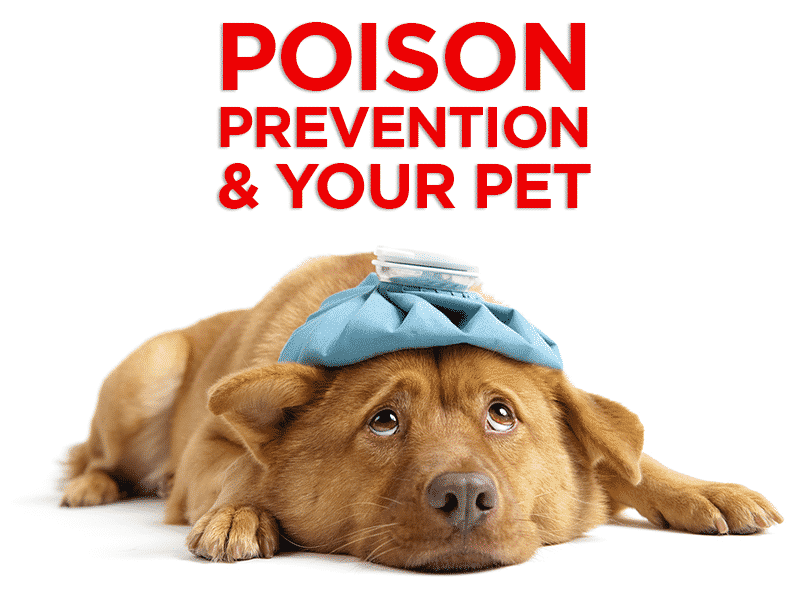
    March is National Poison Prevention Week. What originally began as a way to spread awareness about poisoning in people, evolved into a great way to spread awareness about poisoning prevents for your pets too!

    Is it Common for a Pet to be Poisoned?

    Poisoning is a very common reason that pets make a visit to their local vet. The National Animal Poison Control Center, handled 180,000 cases of animal poisoning in 2013. The good news is, most of these cases can be completely preventable with a bit of knowledge and education. So teach yourself today and don’t let your animal become a statistic.

    How Can I Tell If My Pet has been Poisoned?

    Unfortunately, most of the time a pet that has been poisoned will not show many physical signs and can vary with the type of toxin consumed. Some poisons are caused by pets accidentally eating mice, who have also eaten other poisons or toxins that pets encounter accidentally around the home or yard, like medications, pesticides or antifreeze. If your pet isn’t acting right and you think a poisoning is possible, take it to the vet or ER immediately!

    Seasonal Poison Risks

    Petsafe.net has listed some informative seasonal poison risks. Here are some common warm-weather risks to your pet.

    • Blue-green algae in stagnant ponds
    • Compost piles
    • Swimming pool and hot tub chemicals
    • Cocoa mulch
    • Venomous animals – toads, snakes, scorpions

    And here are their cold-weather counterparts.

    • Antifreeze (see above)
    • Ice melter
    • Liquid potpourri

    How YOU Can Prevent Pet Poisoning

    Everything can be prevented and prevention is key. Keep your medications out of reach in child-safe containers. Make sure all cleaning products and chemicals are in sealed containers and out of reach of pets. Secure your lawn chemicals and antifreeze. Dogs are naturally curious about the world and will get into EVERYTHING. They don’t know the difference between toxins and treats and as their guardians and protectors, it is up to us to keep them safe and make sure all chemicals and medications are secure.


    Source: PetSafe 

    Copyright: Local Value LLC

  • Why Does My Dog Lick So Much?

    Why Does My Dog Lick So Much?

    You’ve might have wondered why your pooch just loves licking so much, especially your face. When you get home, when you’re sleeping, whenever is a good time. They are there to greet you, tongues and all. But why do they love to lick?

    Here are a few reasons:

    • To Show affection
    • To help heal their wounds
    • When they are bored
    • When they are hungry
    • They like the taste of your skin

    Licking is a habit that is learned near after at birth. The mother will lick her puppies to clean them, show affection and stimulate their elimination systems.

    Puppies learn from their mother, so they will use their tongues to discover the world around them.

    Is your dog licking at his paws constantly? Notice a red, swollen, inflamed appearance to the area between the paws? If so, talk to your vet  as soon as possible. Not only is excessive licking very uncomfortable for your dog, but it is often due to an underlying medical problem that should be checked out.

    Petful says:

    If your dog licks a lot, invest some time in training him to be more restrained, especially if he is big. You are prepared to handle his weight and affectionate greetings, but visitors to your home may not be ready for all that heavy licking.”

    Communication

    Dogs also lick people as a form of communication. A lick can be a sign of greeting to humans who have been away all day at work. A lick upon your return may be a way of saying, “Hello,” or “I’m so glad to see you.”

    Though licking can also be a display of dominance as well so it’s important to know the difference.  If you pup is trained and knows that you are in charge, he may be licking you to acknowledge that.

    Sources: Petful, Pet Health Network: